Short answer: a parking barrier needs four levels of maintenance — a daily visual check by site staff, a weekly observation of movement and access control, a monthly test of the safety devices and fixings, and a scheduled mechanical and electrical service by a competent technician at the interval stated in the exact model’s manual. Record every check, and take the lane out of service whenever a safety device cannot be verified.
A boom barrier is often the busiest moving component at a car park, residential development, business park or industrial entrance. It opens and closes thousands of times a week, in rain, in the dark and in the middle of a queue. Regular maintenance finds wear before it becomes a breakdown, keeps the access route dependable and confirms that the safety devices still behave as designed.
The right schedule is not the same on every site. It depends on the barrier model, the number of operating cycles, the environment and the manufacturer’s instructions. This guide sets out a practical four-level checklist that suits most automatic parking barriers in the UK, together with the warning signs that justify stopping a lane.
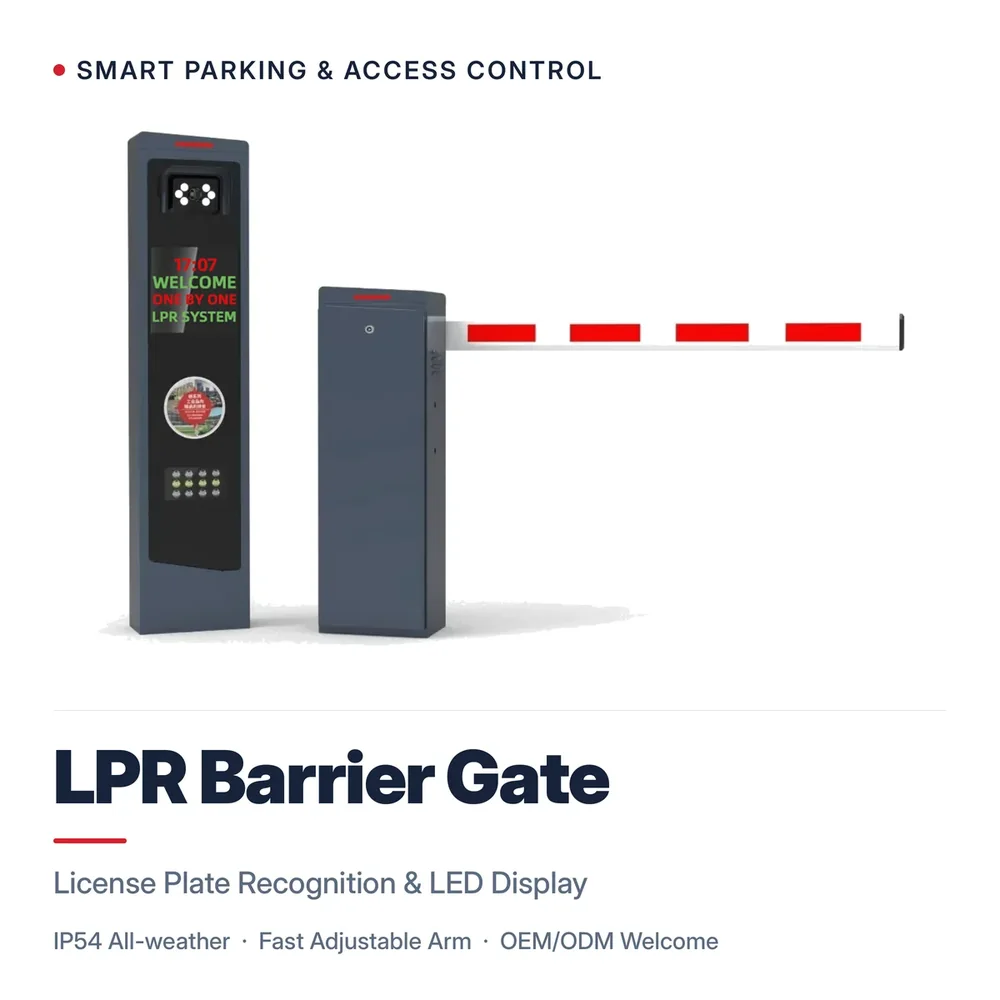
A neglected barrier rarely fails without warning. It slows down, becomes noisy, hesitates at the limit, loses detection accuracy or develops intermittent control faults first. Each of those symptoms is inexpensive to correct and expensive to ignore: they turn into queues at the entrance, unplanned call-outs, restricted access for residents or staff, and — in the worst case — a safety device that no longer protects anyone.
Preventive maintenance also protects the asset. A barrier that is inspected on a fixed cycle keeps its warranty terms intact, gives the site a documented service history, and makes wear parts predictable instead of urgent. The cost of a planned service is almost always lower than the cost of a failed arm at 08:00 on a Monday, or a controller that has to be replaced at short notice.
Maintenance alone does not guarantee safety or legal compliance. It is one part of a wider duty that includes the original installation, the site risk assessment, staff training and the instructions for the exact model installed.
Only trained and authorised personnel should carry out maintenance. Work to the service manual for the exact model and to the site risk assessment, and stop if either document is missing. The rules below apply to every visit, including a five-minute visual check.
Daily checks are visual and take a few minutes. They exist to catch impact damage, vandalism, water ingress and obstructions before the barrier is used in a busy period. No dismantling is needed, and no tools are required beyond a torch and the site log.
Weekly checks look at how the barrier behaves rather than how it looks. Observe several complete opening and closing cycles from a safe position. The arm should move smoothly, stop at its intended limits and show no repeated hesitation, excessive bounce or new mechanical noise. Then test the authorised access methods used on site — remote control, RFID reader, access card, intercom or ANPR — and confirm that an unauthorised command does not open the barrier.
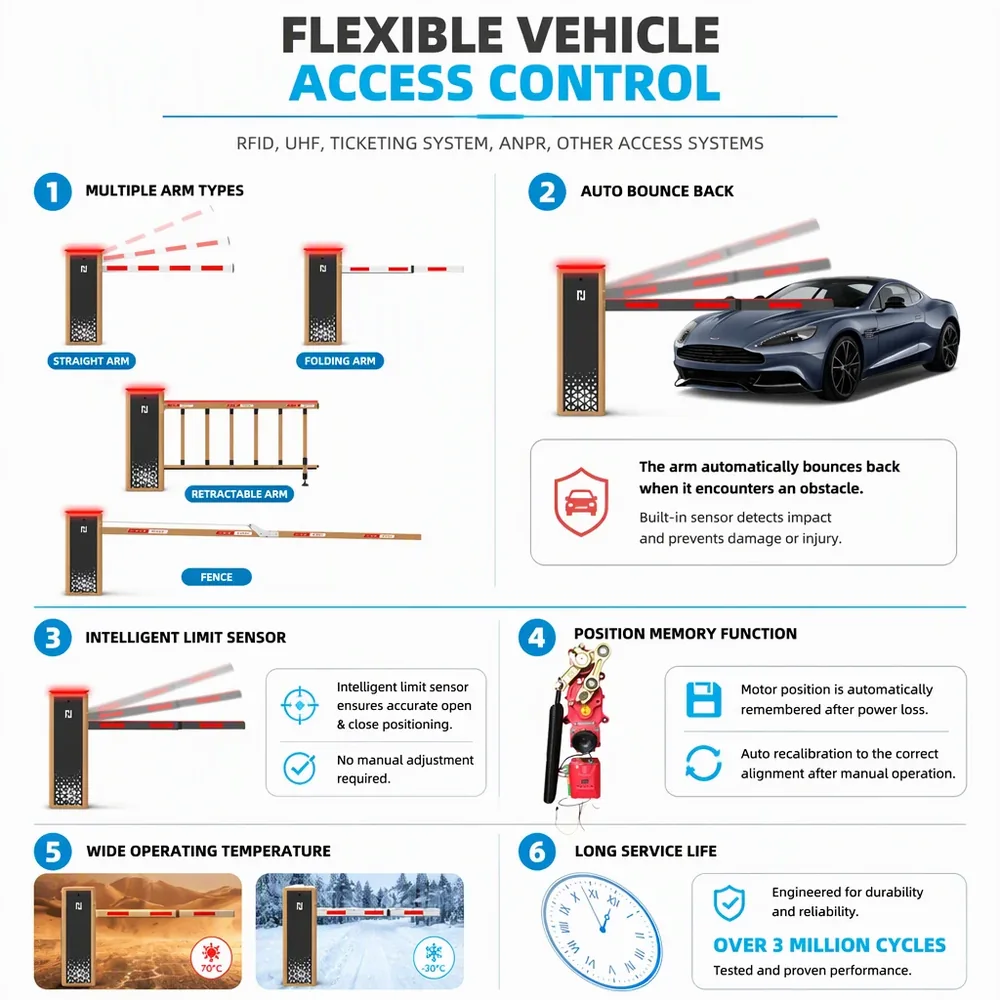
Monthly checks are the point at which a competent person verifies the safety functions rather than simply watching them. Vehicle detection, photocells, radar and inductive loops must respond correctly, and the controller must behave as specified when a detection input is active. Use the manufacturer-approved test method, never place a person or vehicle in a hazardous position to prove a detector works, and record the result of each test.
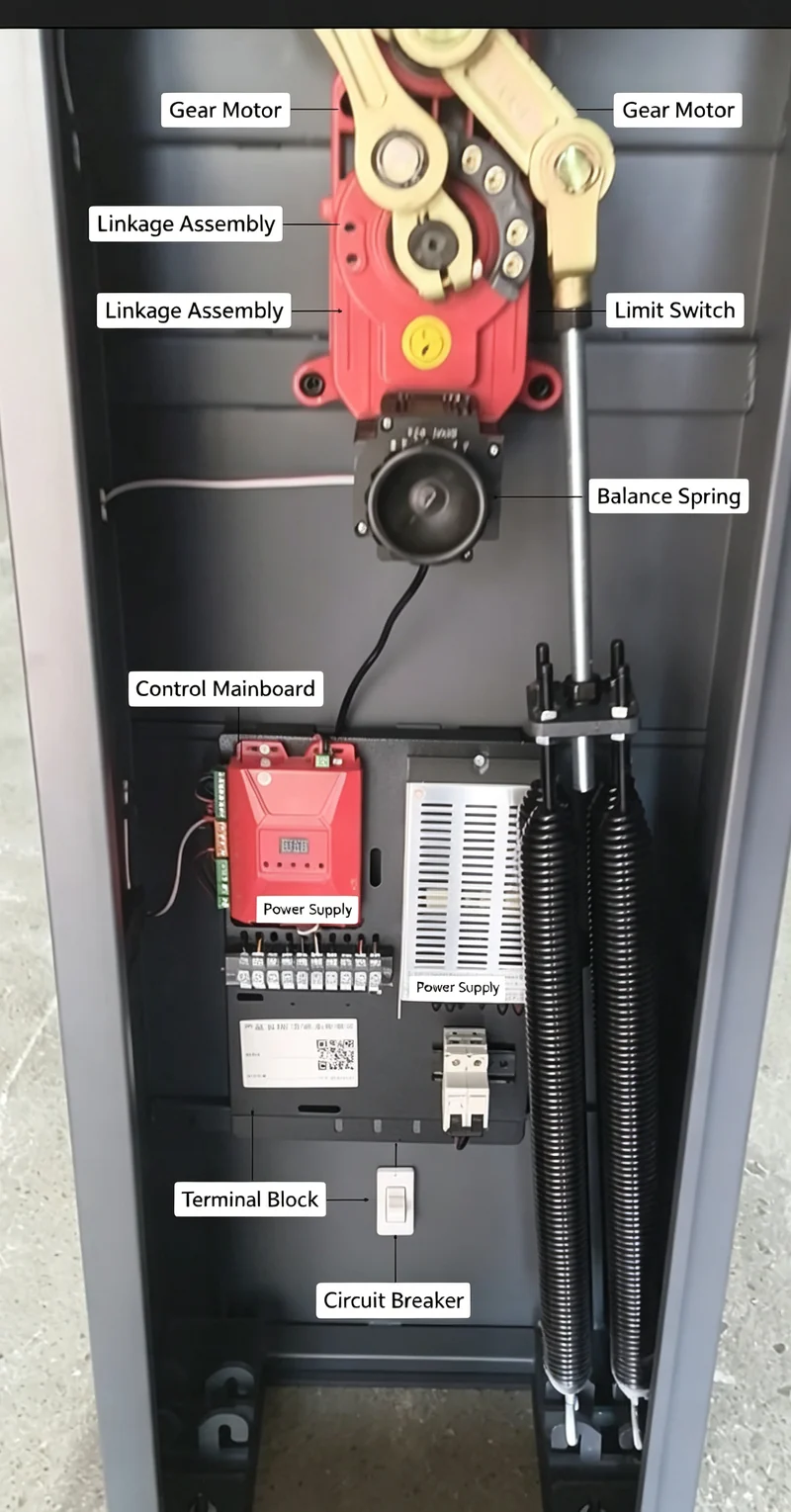
A planned service should be carried out by a competent technician at the interval recommended for the model and its operating conditions. The technician inspects the drive mechanism, gearbox, linkage, spring or counterbalance arrangement, limit settings, control board, terminals, foundation and fasteners, and checks the balance and travel of the arm. Lubrication, adjustment and replacement are carried out only where the manufacturer specifies them, with the specified lubricant — some assemblies use sealed bearings, and a general-purpose grease can attract grit and damage the mechanism.
Outdoor barriers in the UK face persistent rain, wind-driven water, road salt, grit, dust, temperature swings and occasional flooding. Water is the most common cause of premature failure in a barrier cabinet: it enters through damaged seals, poorly protected cable entries or blocked drainage, and it reaches the control board long before anyone notices. Keep drainage clear, avoid directing a pressure washer at seals or electrical enclosures, and use only cleaning products approved for the cabinet finish.
After severe weather, a flood or a vehicle impact, carry out an additional inspection before returning the barrier to normal service. Coastal and industrial sites usually justify a higher ingress-protection rating, additional corrosion protection and a shorter inspection interval; ask the supplier to confirm what the exact model is rated for rather than assuming a single rating applies to the whole range.

Most failures announce themselves. The table below matches the symptom an operator is likely to see with the action that is safe to take without specialist tools. When in doubt, take the lane out of service and call a competent technician.
| Symptom | Operator action |
|---|---|
| Arm moves slowly or unevenly | Stop repeated cycling, log the symptom and request a mechanical inspection. |
| Barrier does not respond to access control | Check the approved user-side procedure first, then report a controller or communications fault. |
| Safety detector appears unreliable | Take the lane out of service if safety cannot be assured, and arrange competent testing. |
| Cabinet shows water ingress or electrical damage | Isolate the equipment following site procedure and request qualified support. |
| Arm is bent or has been struck | Do not operate until the arm, balance and safety functions have been inspected. |
| New noise, smell or tripped breaker | Stop the barrier, isolate the supply and report it the same day. |
A maintenance log is the cheapest diagnostic tool a site can own. It shows what was checked, by whom, and when a symptom first appeared — which is exactly the information a technician needs on the first visit rather than the third. Keep the log with the installation manual, wiring diagrams, risk assessment and commissioning documents.
| Frequency | What is checked | Carried out by |
|---|---|---|
| Daily | Arm condition, swept path, cabinet security, warning indicators, unusual noise | Site staff |
| Weekly | Opening and closing behaviour, authorised access methods, visible detectors, fault log | Site staff or supervisor |
| Monthly | Approved safety-device tests, fixings, wiring, seals, manual-release instructions | Competent person |
| Scheduled | Drive, gearbox, linkage, balance, limits, terminals, foundation | Competent technician |
| After an incident | Impact, flooding, storm damage, power fault or unexplained operation | Competent technician |
| Every visit | Results, corrective work, parts used and next due date recorded | Whoever attends |
Maintenance should be considered before a replacement barrier is bought, not after the first call-out. Ask the supplier for the service manual for the exact model, the recommended inspection intervals, the wear-parts list, the warranty terms, the duty rating and the approved procedures for manual release and fault diagnosis. Confirm that replacement arms, control boards, motors and compatible detectors are available in the UK, and that the controller interfaces match the access-control equipment already on site.
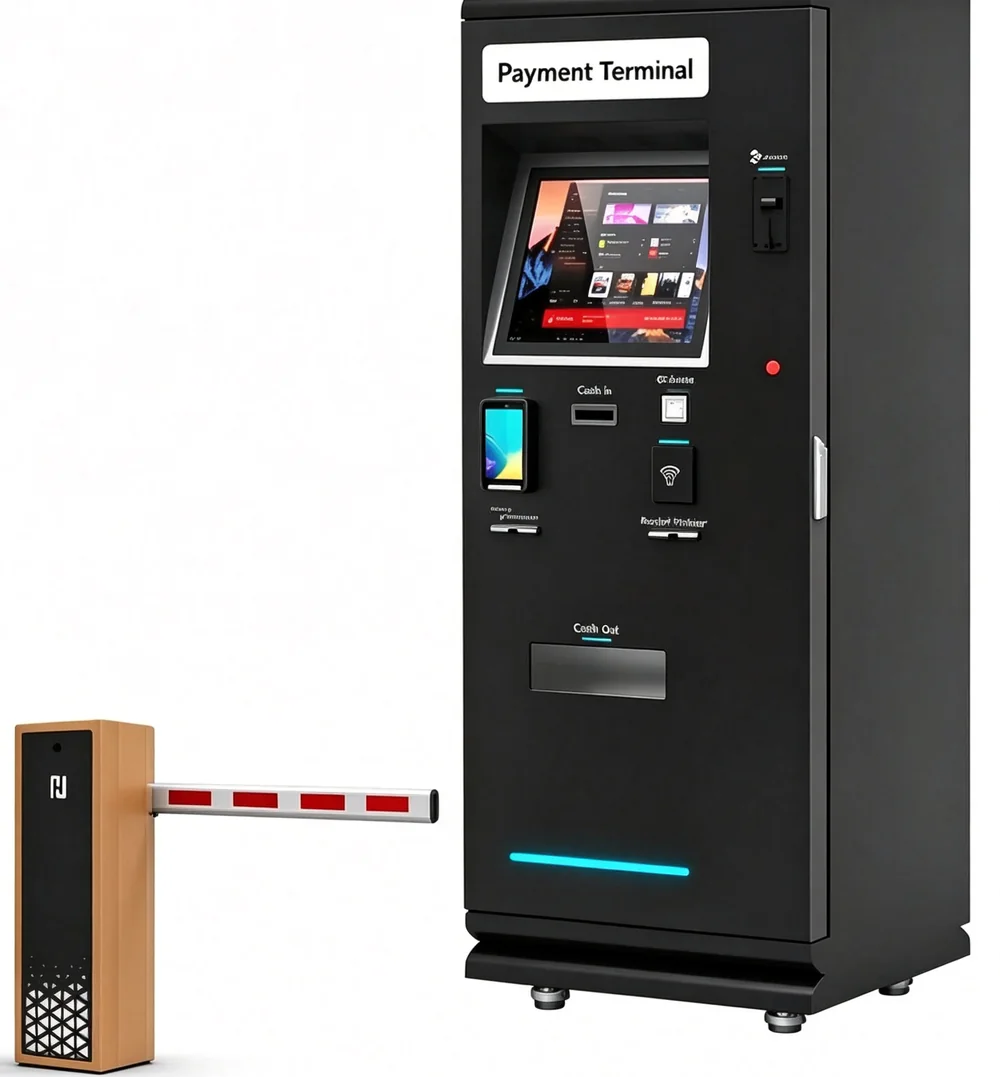
A barrier is also part of a wider access system. Where a site uses ticketing, plate recognition or payment, the barrier, the reader and the payment equipment share the same lane and the same failure modes, so they should be specified, commissioned and maintained together.
There is no single interval that suits every installation. Follow the maintenance schedule in the exact model’s manual, then adjust inspection frequency for traffic volume, cycle count, weather exposure, site risk and the supplier’s recommendations. Busy retail and logistics entrances normally need more frequent checks than a lightly used private access point.
Only when the manufacturer’s instructions explicitly permit it and the person has been trained for the task. Some mechanisms use sealed bearings or require a specific lubricant and procedure. Incorrect lubrication can attract grit, damage components and affect the warranty.
Keep the barrier out of service until a competent person has inspected the arm, mounting points, balance, drive mechanism, limits and safety devices. A boom can look intact while internal parts or alignment have moved. Record the incident, and do not return the barrier to use simply because it still moves.
If safe operation cannot be assured, follow the site emergency procedure and take the affected lane out of service until the fault has been assessed and corrected. Do not bypass a detector, and do not rely on a member of staff watching the arm as a substitute for a working safety system.
No. Daily and weekly checks are visual and operational, and site staff can carry them out after basic instruction. Safety-device testing, adjustment and any work inside the cabinet should be left to a competent person.
This guide is general operational information. It does not replace the maintenance manual for the installed model, the site risk assessment or the advice of a competent technician, and service intervals, lubrication points, test methods and warranty conditions vary by model.
For model information and maintenance documentation, review the automatic boom barrier range from Baroxon UK, compare ANPR parking barrier systems and integrated LPR parking access control where plate recognition or payment is part of the scheme, and read the boom barrier selection guide before specifying a replacement. To confirm the service requirements for the exact model on your site, request model-specific maintenance guidance and our engineers will answer in writing.
To understand the wider system a barrier sits inside, read what a smart parking access control system is and which components it combines.

 WhatsApp: +8613405313100
 Scan to add our export desk