Short answer: a smart parking access control system is the combination of hardware and software that decides whether a vehicle may enter or leave a car park, opens the barrier when the rules are met, and records what happened. It usually brings together an automatic boom barrier, a vehicle detector, one or more identification methods (ANPR, RFID, QR code, ticket or intercom), a controller running the access rules, and optional payment and reporting software. The barrier is only the visible part; the value comes from the decision and the record behind it.
A driver arriving at a car park usually meets the same few moments: a vehicle approaches, somebody or something decides whether it may pass, a barrier opens, the vehicle drives through and the event is written down. In a conventional car park those steps are handled by tickets, intercom buttons and staff. In a smart system they are handled by equipment and software that follow rules written by the operator.
That difference matters more than the label suggests. Once entry and exit decisions are made by a system rather than by a person, the operator gains consistency, a usable record of vehicle movements and the ability to change policy without retraining everyone at the gate. It also creates new responsibilities: the rules have to be written down, the equipment has to be installed correctly, and the data has to be handled lawfully.
This guide explains what a smart parking access control system consists of, how the entry and exit sequence works, which identification method suits which site, and what UK operators should check before specifying one.
Most systems follow the same six-step sequence, whatever the equipment brand: detect the vehicle, identify it or receive an access request, check the permission, open the barrier when the rules are satisfied, confirm the vehicle has passed safely, and log the event. At the exit the system either repeats the same checks or confirms that the parking session has been paid for.
The sequence is deliberately simple, because every step has to work in bad weather, in the dark and in a queue. A system that identifies vehicles perfectly but closes the arm too early is worse than a manual gate, so detection and safety devices sit alongside identification in the design.
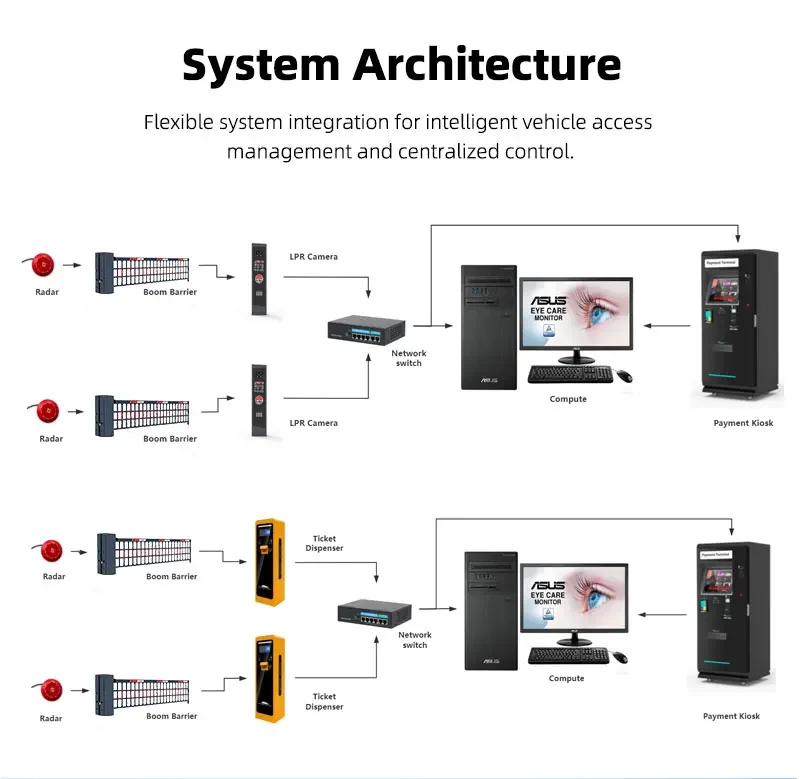
A vehicle detector tells the controller that a vehicle is approaching or standing in the controlled lane. Detection may use an inductive ground loop cut into the surface, a radar sensor mounted on the barrier or a column, or another compatible device. The choice depends on the surface, the lane width and whether the lane has to be reinstated.
Positioning matters more than the technology. A detector placed too far forward triggers the barrier before the driver is ready; one placed too far back fails to see a small car or a vehicle that stops short. Both faults produce the same complaint at the gate: the barrier opens at the wrong moment. Detection is also a safety input, because the controller uses it to decide that the lane is clear before the arm lowers.
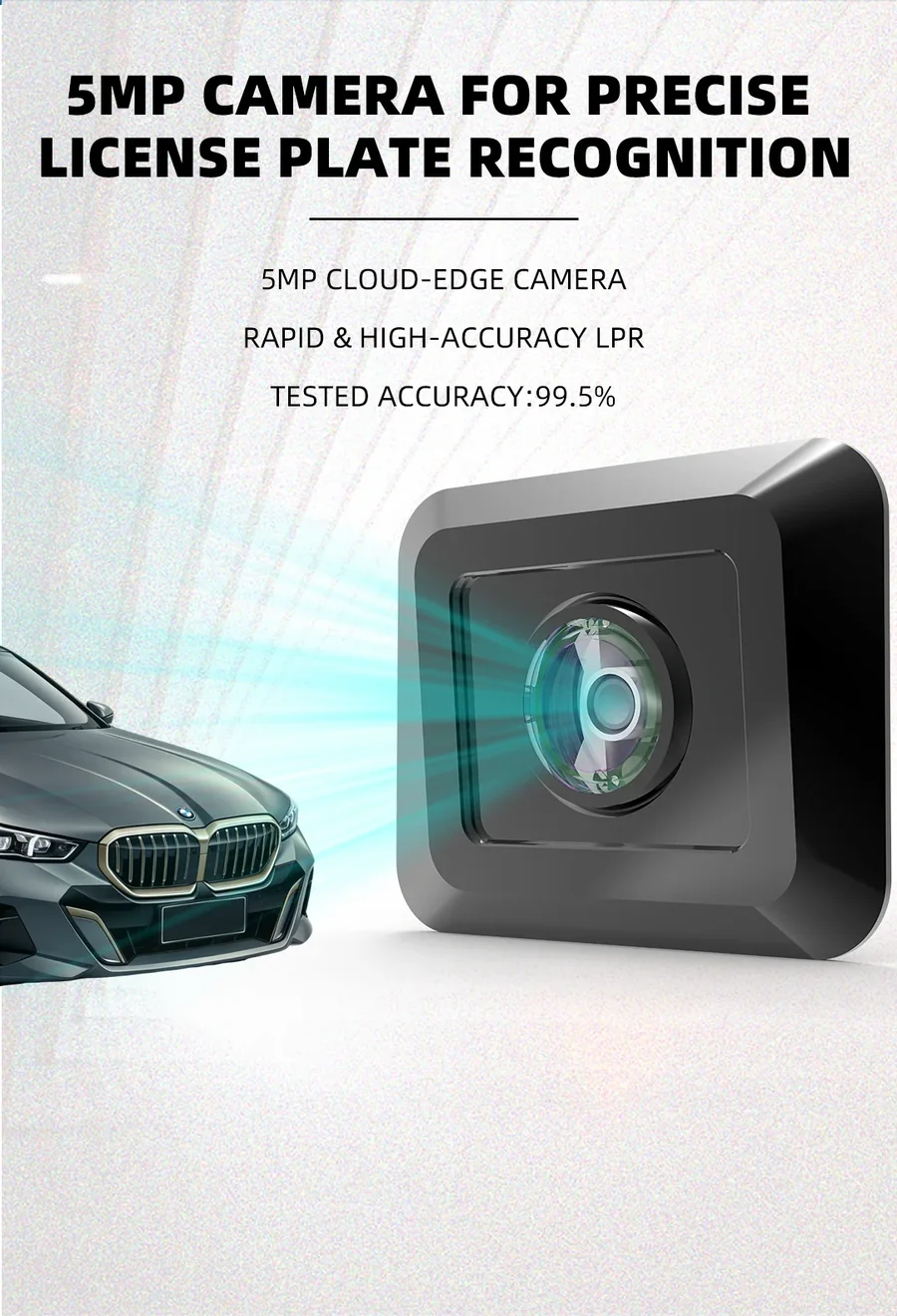
The system then establishes who is asking for access. An ANPR camera reads the registration plate and compares it with an authorised list or a site rule. An RFID reader checks a tag or card issued to a known user. A QR code, ticket, intercom call or reception approval covers visitors and occasional users who are not in the database.
Whichever method is used, the important design question is what happens when identification fails. Every real site has unreadable plates, expired tags, delivery drivers who are not on any list and visitors who arrive without a booking. A system without a defined exception route simply moves the queue to the intercom.
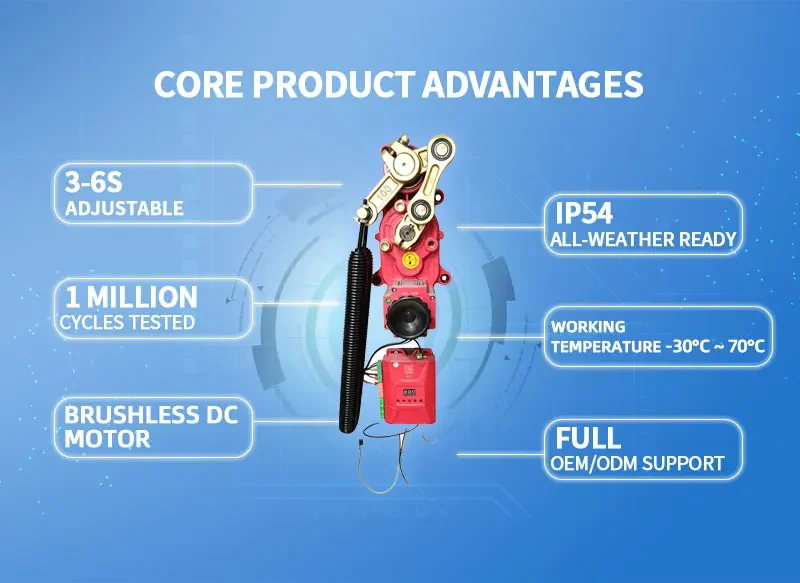
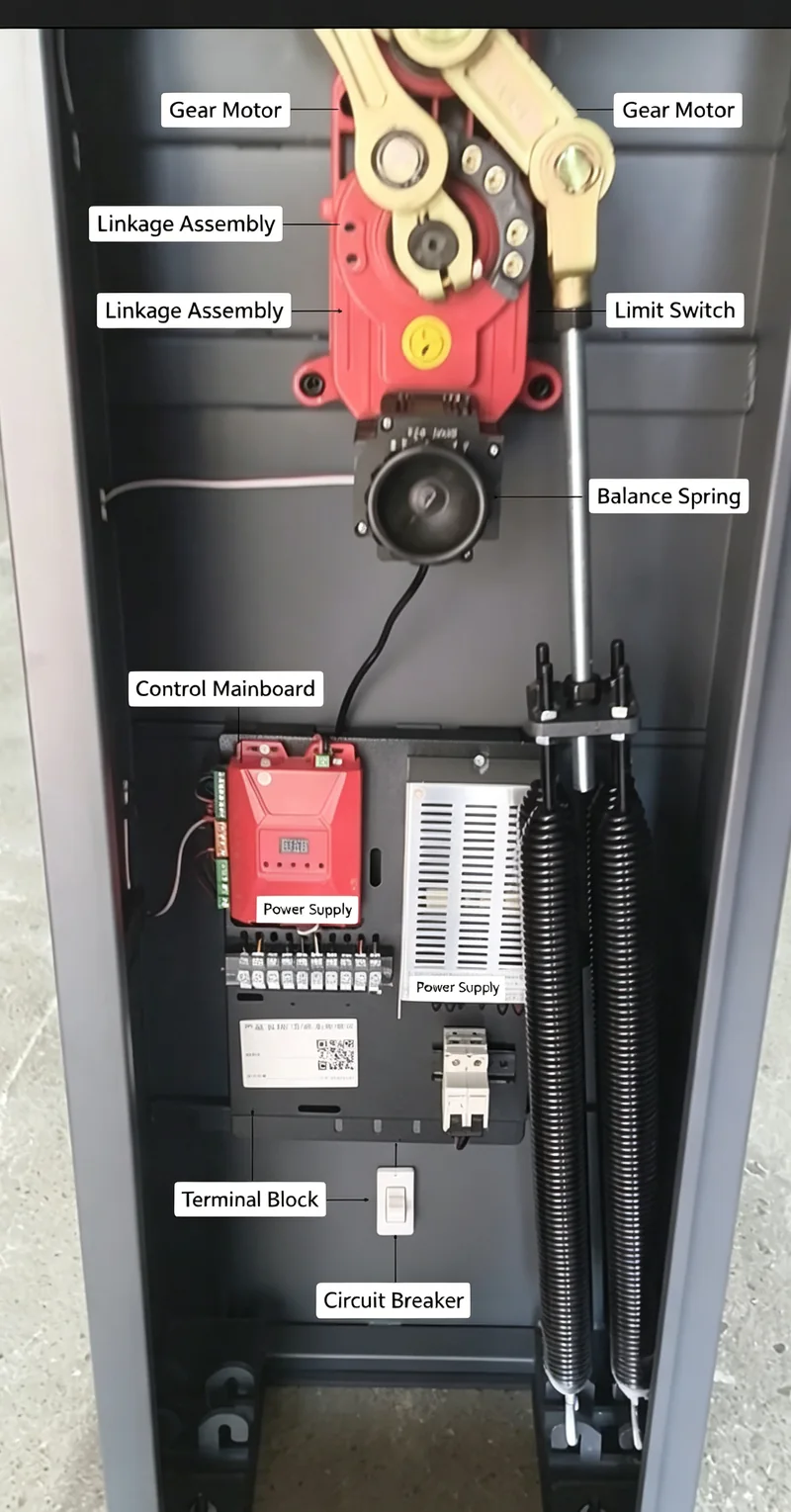
When access is approved, the controller sends an open command to the automatic boom barrier. The barrier is the only part of the system most drivers ever see, and it carries the mechanical duty: arm length, opening speed, duty cycle and the ability to survive wind and repeated use.
Selection should follow the lane, not the brochure. A short arm across a single car lane, a long arm across two lanes, and a fence-style arm at an industrial gate are different products with different foundations and different service requirements. Where traffic is heavy or vehicles are tall, a barrier rated for the cycle count and the vehicle height is the safer starting point.
While the vehicle passes, the controller watches its safety inputs. If a detector still reports a vehicle under the arm, the arm must not lower. This is the part of the system that is hardest to test and most important to maintain, because a barrier that closes on a vehicle is a safety incident rather than a convenience problem.
At the same time the system records the event: time, lane, identification result, decision, any manual override and any alarm. Those records are what make the system useful after the fact — for a resident disputing a charge, a facilities manager investigating a claim, or an engineer tracing an intermittent fault.
A smart car park is not a barrier with a camera bolted to it. It is a coordinated installation in which each part has one job, and the parts have to be able to talk to each other. The table below is the practical component list to work through at specification stage.
| Component | Main function | What to confirm before ordering |
|---|---|---|
| Automatic boom barrier | Physically controls vehicle entry and exit. | Arm length, opening time, duty cycle, foundation and power supply. |
| ANPR / LPR camera | Reads registration plates for authorised access or parking management. | Mounting height, lighting, lane geometry and the interface to the controller. |
| RFID reader and tags | Provides contactless identification for registered vehicles. | Read range, tag type and how lost or returned tags are managed. |
| Vehicle detector or radar | Detects vehicle presence and supports safe barrier operation. | Detection zone, surface condition and behaviour with trailers or high vehicles. |
| Controller and access software | Applies access rules, connects devices and records events. | Interface types, licence terms, who configures the rules and who supports them. |
| Payment terminal or platform | Supports paid parking where the site charges for stays. | Where payment happens, and how a failed or disputed payment is resolved. |
| Intercom or visitor workflow | Lets visitors request access or obtain approval. | Who answers, how the decision is recorded, and what happens out of hours. |
| Network and power equipment | Connects the devices and supplies reliable power. | Cable routes, surge protection, backup behaviour and who maintains the network. |
Identification is the design decision that shapes the whole project, because it determines who can be let through automatically and who needs a person. Most sites end up with a main method and at least one fallback.
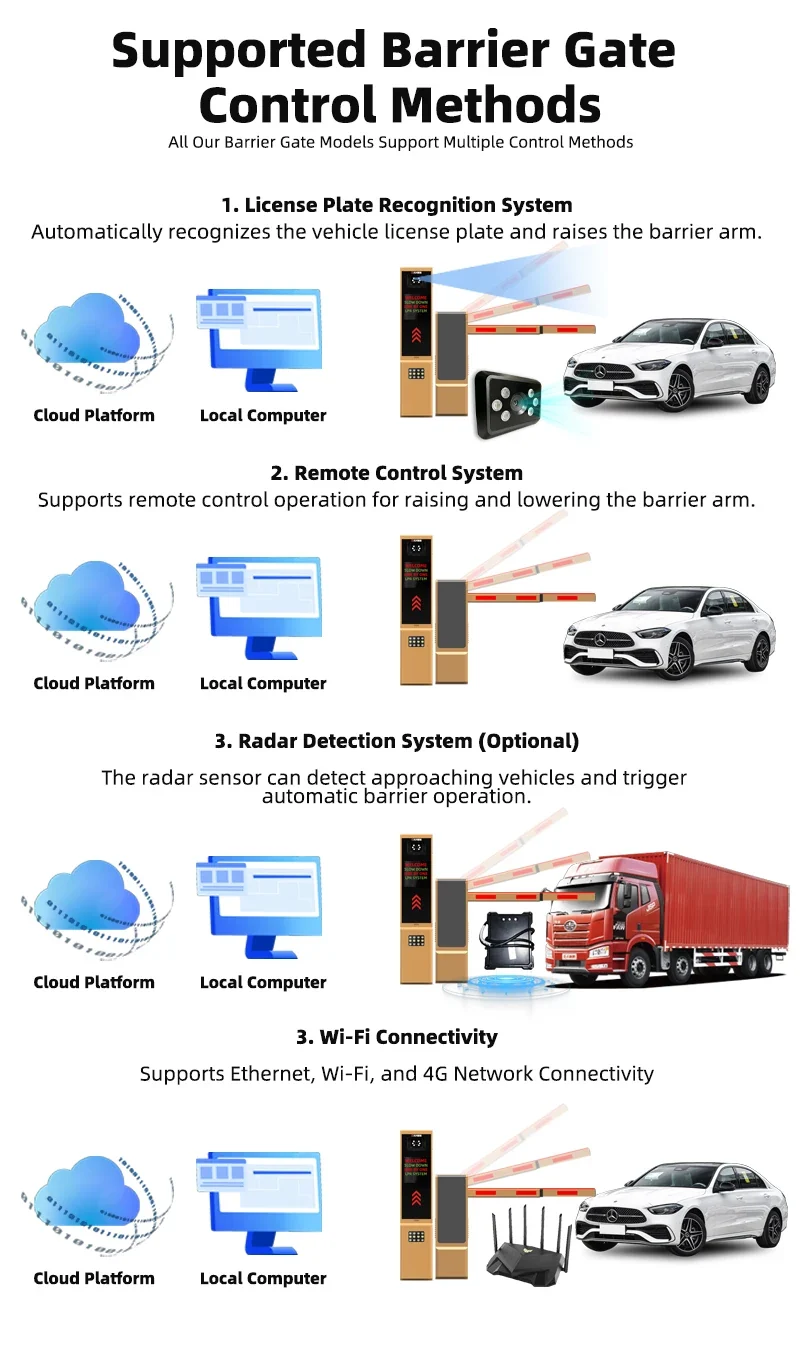
ANPR is the right choice where authorised vehicles should enter without stopping to present a card: staff car parks, permit-holding residents, fleet depots and paid car parks where the plate itself is the ticket. The camera reads the plate and the system checks it against a list or a rule.
Recognition quality depends on camera position, lighting, plate condition, vehicle speed, weather and how well the camera is integrated with the controller. A camera mounted at the wrong angle will read plates perfectly in a demonstration and fail in the rain at 08:30. Operators should also define what happens with unreadable plates, personalised plates, trailers and vehicles without a front plate.
RFID suits staff car parks, residential developments and fleet entrances where tags or cards can be issued to known users. It is fast, it works in poor weather and it does not depend on plate condition. The operational cost sits in administration: issuing, replacing and cancelling tags when people join, leave or hand back a vehicle.
QR codes and tickets handle visitors and short stays, and payment integration links a paid session to an exit authorisation. Before choosing this route, decide where payment happens — at entry, at a pay station, online or at the exit — and how the system behaves when a payment fails, is duplicated or is disputed days later.
An intercom remains necessary for deliveries, contractors, emergency services and visitors who are not in any database. Its value depends entirely on the procedure behind it: who answers, how the request is verified, how the decision is logged and what the site does when nobody is available.
The commercial case for a smart system is rarely about the barrier opening automatically. It is about what happens around that moment.
For operators, the value is not simply that the gate opens automatically. The real objective is a predictable process for residents, employees, visitors and contractors, with exceptions, safety and maintenance kept under control. No single configuration is right for every site, so the system should be specified around actual traffic patterns and operating policy rather than around a product list.
Start with a site survey, not with a product brochure. Record the number of lanes, peak-hour flow, lane width and approach, vehicle types including vans and high-sided vehicles, expected daily cycles, the visitor process, payment requirements and what should happen during a power or network failure.
Then test the integration on paper. Ask for the interfaces each device offers — relay, Wiegand, RS485 or TCP/IP — and confirm how the barrier controller will exchange authorisation signals with the access software. Ask for a signal-flow drawing, a wiring diagram, commissioning steps and the documentation the project will need at handover.
Finally, evaluate whole-life operation: warranty scope, spare-part availability, maintenance access, remote diagnostics, software support, training and the fault-response process. For outdoor UK installations, confirm the enclosure rating, corrosion protection, drainage and foundation requirements for the actual location, especially at exposed or coastal sites.
| Design question | Why it changes the specification |
|---|---|
| How many vehicles per peak hour? | Sets the opening speed, duty cycle and whether one lane is enough. |
| Who must enter without stopping? | Decides whether ANPR or RFID is the primary method. |
| How are visitors handled? | Determines the need for intercom, QR code or reception approval. |
| Is the site charged for parking? | Adds payment terminals, validation rules and exit authorisation. |
| What happens in a power cut? | Drives backup power, manual release and emergency procedures. |
| Who will maintain it? | Affects the choice of controller, software and local support arrangements. |
A smart access system has to be designed around safe vehicle movement, not only around security. Barrier arms, detectors, warning indicators and access rules should be installed and commissioned by competent personnel, in line with the equipment instructions and the site risk assessment. Keep lane markings visible, keep pedestrians out of vehicle paths, and document how emergency access and manual release work on the equipment installed.
Where ANPR is used, registration plates and the associated event log may be personal data, depending on how the system is operated. UK operators should establish a lawful purpose, restrict who can see the records, set a retention period that matches that purpose, display privacy information where the site requires it, and review the arrangement against applicable UK data protection obligations. The same discipline applies to images from any camera on site.
None of that is unusual, but it does need an owner. A system with no named person responsible for access rules, records and retention drifts: rules accumulate, leavers keep their access, and nobody can explain an old entry. Assigning that responsibility at specification stage is cheaper than correcting it later.
Routine inspection keeps the system dependable. Follow the manufacturer’s maintenance instructions and arrange competent servicing at an interval that reflects traffic volume and site conditions. Checks typically cover the arm and fixings, cabinet condition, detector response, warning lights, manual release, controller logs and the operation of connected readers or cameras.
| Symptom | Possible checks | Operator action |
|---|---|---|
| Barrier does not open | Authorisation status, controller power, access signal, fault indicators. | Verify the vehicle is actually authorised, then report the fault. |
| ANPR fails to recognise a plate | Camera view, lighting, plate condition, network connection, recognition settings. | Use the exception procedure; do not adjust the camera without authority. |
| RFID access is inconsistent | Tag registration, reader position, interference, permissions. | Test with a known good tag before reporting. |
| Barrier starts closing too early | Detector placement and safety inputs. | Stop using the lane if unsafe and call a competent technician. |
| System records are missing | Network connectivity, software configuration, time settings, log storage. | Log the gap in writing; missing records are hard to reconstruct. |
Never bypass a safety device to keep a lane operating. If a barrier behaves unpredictably, isolate the equipment following the site procedure, stop vehicles from using the lane and contact a qualified service technician. Record the fault, the conditions, any error messages and any recent changes, because that record is usually what makes the fault findable.
No. An automatic boom barrier is one component that physically controls a vehicle lane. A smart parking access control system also includes vehicle identification, access rules, detection, payment, visitor handling and reporting software. A site can have a barrier without any of the intelligence, and a site can have the software behind more than one barrier.
No. ANPR is appropriate when plate recognition fits the access policy and the site has usable lighting and lane geometry. Other sites are better served by RFID, QR codes, cards, intercom approval or a mix of methods. The decision should follow the users, the traffic flow, privacy considerations and the operating cost of each option.
Often, provided the devices and software support compatible interfaces and the integration is configured properly. Confirm the interface type, signal logic, network requirements, licensing and who is responsible for commissioning before ordering. Integration is a design task, not a plug-in step.
Consider rainfall, wind exposure, temperature range, corrosion risk, drainage, foundations, power supply, network coverage and maintenance access. Confirm the product’s actual environmental rating and the location-specific installation requirements with the supplier rather than assuming a generic outdoor rating is enough.
There is no single price. The total depends on the number of lanes, the barrier model, the identification method, payment functions, software, civil works, networking, installation and support. Ask for an itemised quotation based on a site survey and a written scope of supply, so that options can be compared on the same basis.
That depends on the equipment and the design. Ask specifically about backup power, what the controller does when it loses communication, whether manual release is available and how the site will keep traffic moving safely during an outage. The answer should be written into the operating procedure, not discovered on the day.
A smart parking access control system connects vehicle identification, access permission, automatic barriers, safety detection and management records into one coordinated process. The barrier remains the visible element, but the operating value sits in the rules, the exception handling and the log.
For UK car park operators the best solution is the one that fits the site’s traffic patterns, user groups, safety requirements, privacy obligations and maintenance capability — not simply the one with the longest feature list. A modest system that is correctly specified, properly commissioned and maintained will outperform an elaborate one that nobody can support.
This article is general guidance. It does not replace the instructions for the equipment installed on a particular site, the site risk assessment, or legal advice on data protection.
To compare vehicle barrier options, review the Baroxon UK boom barrier range. Where plate recognition is part of the scheme, see ANPR parking barrier systems and integrated LPR parking access control with payment. For specification support on a live project, discuss your access control requirement with Baroxon UK and our engineers will confirm interfaces, options and lead times in writing.
Detection is only part of the chain. For the devices that decide whether the arm may close, read parking barrier safety sensors for facility managers.

 WhatsApp: +8613405313100
 Scan to add our export desk