Short answer: parking barrier safety sensors are the devices that tell a barrier controller whether a vehicle, a person or an obstruction is present in the controlled lane, so the arm does not close on something it should not. The four technologies used on UK sites are radar vehicle detectors, inductive loop detectors, photocells or infrared beams, and pressure-sensitive safety edges. None of them is universally best, and none of them makes a barrier safe on its own: the result depends on the sensor, its mounting position, its configuration, the controller logic, the commissioning tests and the maintenance regime.
A boom barrier looks like a simple machine. A cabinet, a motor, an arm that goes up and an arm that goes down. The part that decides whether the movement is safe is almost invisible: a small detector on the cabinet or in the road surface, wired back to a controller that has been told what to do when that detector reports a vehicle.
When that chain works, nobody notices it. When it fails, the failure is visible and expensive. An arm coming down on a bonnet, a lane stuck open because a detector is permanently triggered, a barrier that opens for every passing van because the radar is aimed at the road instead of the lane — all of these are detection problems, not motor problems.
This guide explains what each sensor technology actually detects, where each one is appropriate, how the sensor interacts with the barrier controller, and what UK facility managers should check before specifying, commissioning and maintaining a detection system.
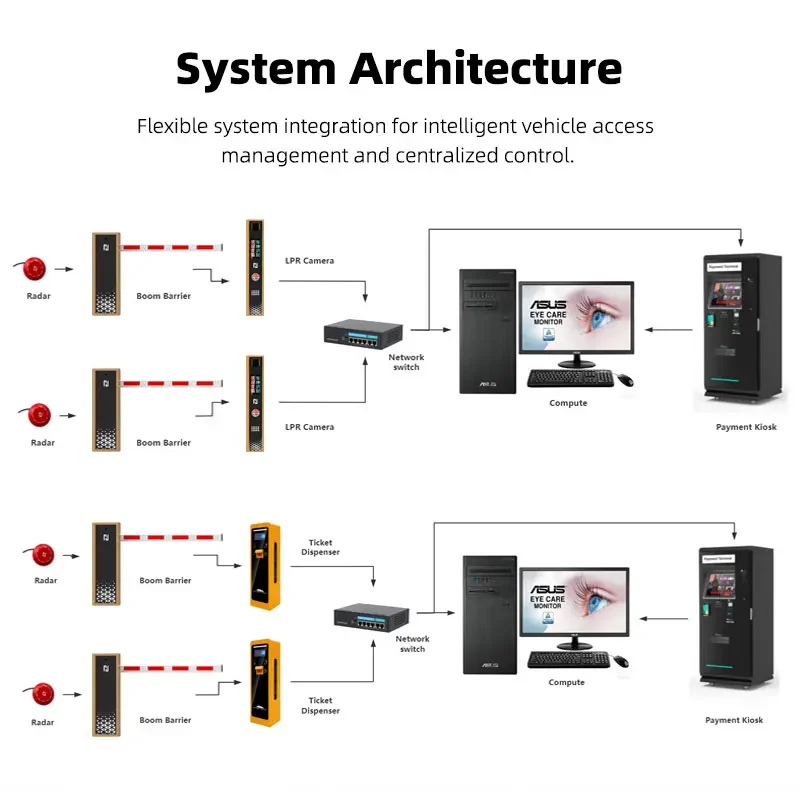
A parking barrier safety sensor is a device that detects a vehicle, a person, an obstruction or movement inside a defined area near a boom barrier, and passes a signal to the barrier controller or access system. Depending on the design, that signal may stop the arm from lowering, trigger a stop or reverse command, hold the barrier open while a vehicle passes, or simply tell the access controller that the lane is occupied.
The wording matters, because “safety sensor” is used loosely in the trade. A radar detector monitoring a field, an inductive loop detecting metal over a coil in the road, and a photocell watching a single beam are all described as safety sensors, yet they detect different things, cover different areas and serve different functions. One may be certified as a protective device; another may be a convenience detector that helps traffic flow.
A sensor is therefore one component of a safe installation, not a guarantee of one. Performance also depends on the controller, the sensor position and settings, the vehicle mix using the lane, the site layout, the commissioning and the maintenance. Adding a detector to a badly designed lane usually produces more nuisance alarms rather than more safety.
Four technologies account for most of the detection fitted to vehicle barriers in the UK. They differ in what they can see, what they need installed in the ground, and how they fail.
Radar sensors emit radio waves and detect objects or movement inside a configured field. On a barrier lane the sensor is normally mounted on the cabinet or on a nearby column and aimed along the lane. Depending on the model and configuration, radar can detect a vehicle approaching the barrier, a vehicle standing under the arm, or a pedestrian crossing behind a vehicle, and can support anti-collision control.
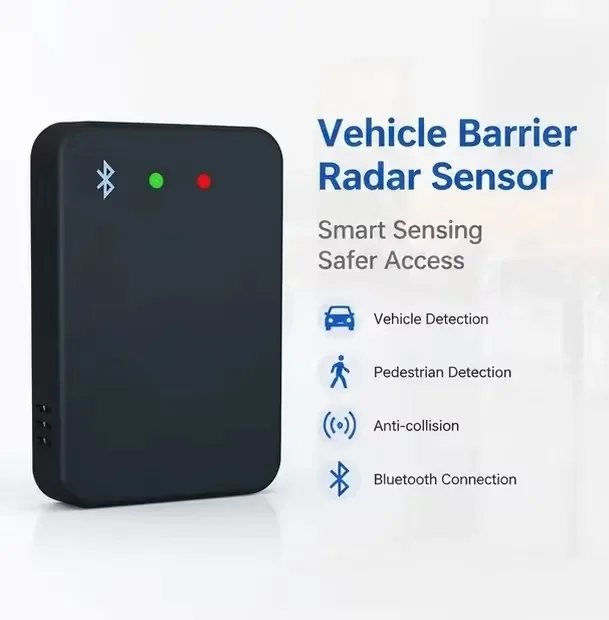
Radar is often chosen where the operator wants to avoid cutting a loop into the road surface, or where vehicles stop, reverse or approach at slightly different angles. It also has an advantage in retrofit work, because the sensor can be fitted to an existing barrier without civil works.
The detection field, however, has to be set for the actual lane. Adjacent traffic, metal structures, roller shutters, mounting height and sensor angle all affect performance. A radar aimed too wide will see passing vehicles on the public road and hold the barrier open; one aimed too narrow will miss a low sports car or a vehicle that stops short of the expected point. Commissioning should therefore use representative vehicles and manoeuvres, not a single test with the installer’s van.
An inductive loop is a coil of wire installed in or beneath the road surface, connected to a detector unit in the cabinet. When a suitable metal mass passes over it, the detector registers the change in the electromagnetic field and switches its output. Loops are widely used for vehicle presence and are a familiar part of barrier control arrangements.
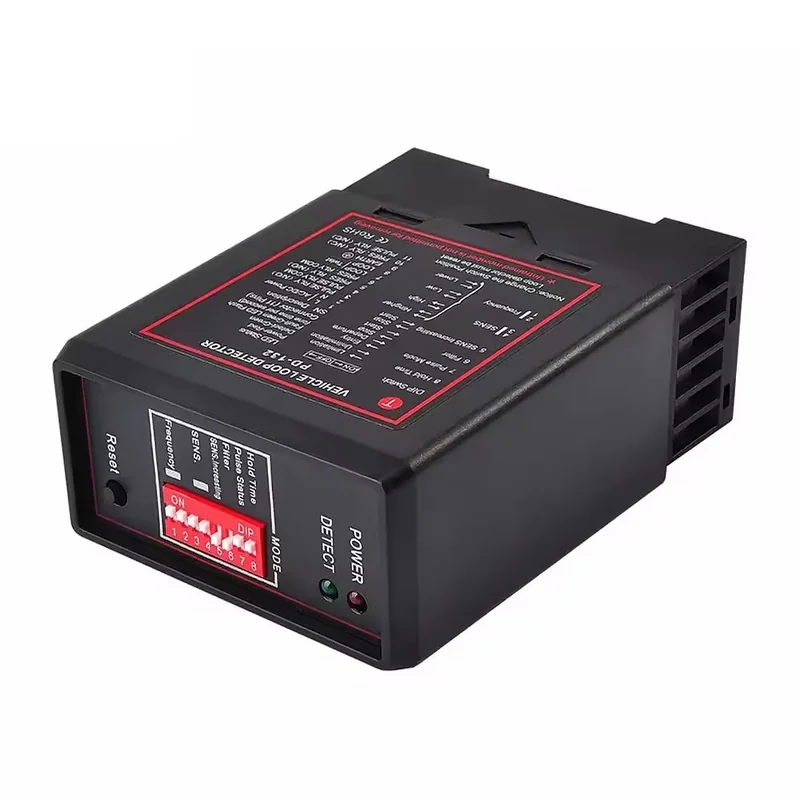
A loop is reliable when it is designed and installed properly. Its performance depends on the loop geometry, the number of turns, the distance from metal reinforcement or services, the detector settings and the condition of the surface. A loop cut too close to reinforcing mesh, or one where water has entered the joint, will produce intermittent faults that are hard to diagnose from the barrier itself.
Loops are a practical option where road works are already planned, the lane geometry is stable and the operator is content to maintain an asset buried in the ground. Facility managers should also weigh the future cost: resurfacing, water ingress, cable damage and the downtime required to repair a detector embedded in the road. A loop is not automatically the right answer for every entrance.
A photocell uses a transmitter and a receiver to monitor a beam across a defined line. When an object interrupts the beam, the controller receives a signal. Photocells are inexpensive, easy to understand and useful for detecting presence at one specific point, typically across the arm closing line or across a pedestrian exit.
The limitation is geometry: a single beam only monitors its own line. A vehicle that has reversed, turned, stopped short or is standing outside the beam will not be seen. Photocells are therefore specified according to the risk being controlled and should not be treated as a substitute for a full risk assessment of the lane. The installer must confirm alignment, mounting height and the action the controller takes when the beam is broken and when it is restored.
Some automated gate designs use pressure-sensitive safety edges or similar protective devices to detect contact with an obstruction. Whether a specific boom barrier can use such a device depends on the equipment design and the manufacturer’s instructions. A safety edge on a gate leaf and a radar field on a barrier lane are not interchangeable, and one cannot be assumed to satisfy the requirement for the other.
Facility managers should not accept a substitution — of one sensor type for another, or of a sensor for a guard — without a documented engineering assessment from the supplier or installer. The assessment should state the hazard, the protective measure, the standard applied and the residual risk.
| Technology | What it detects | Best suited to | Main limitations |
|---|---|---|---|
| Radar vehicle detector | Movement and presence inside a configurable field, including vehicles and pedestrians | Retrofit lanes, mixed traffic, avoidable civil works, pedestrian detection behind a vehicle | Field must be tuned on site; sensitive to aim, metal structures and adjacent traffic |
| Inductive loop | Metal vehicle mass over a buried coil | Stable lane geometry, new build or resurfacing projects, presence detection under the arm | Requires road cutting; vulnerable to water ingress, cable damage and resurfacing |
| Photocell or infrared beam | An object crossing one defined line | Point protection at the closing line or a pedestrian route | Single line only; blind to vehicles outside the beam; needs reliable alignment |
| Safety edge | Physical contact or pressure on the edge | Devices designed and approved for that edge | Reacts after contact; suitability depends on the barrier design and manufacturer |
In a typical installation a vehicle approaches the lane and the access system decides whether entry is permitted. The barrier controller drives the arm; the configured detection and safety inputs tell it whether the lane is occupied and whether the arm may lower. The detection signal may also be used for free-exit logic, so a vehicle leaving a car park lifts the arm without a ticket or a call.
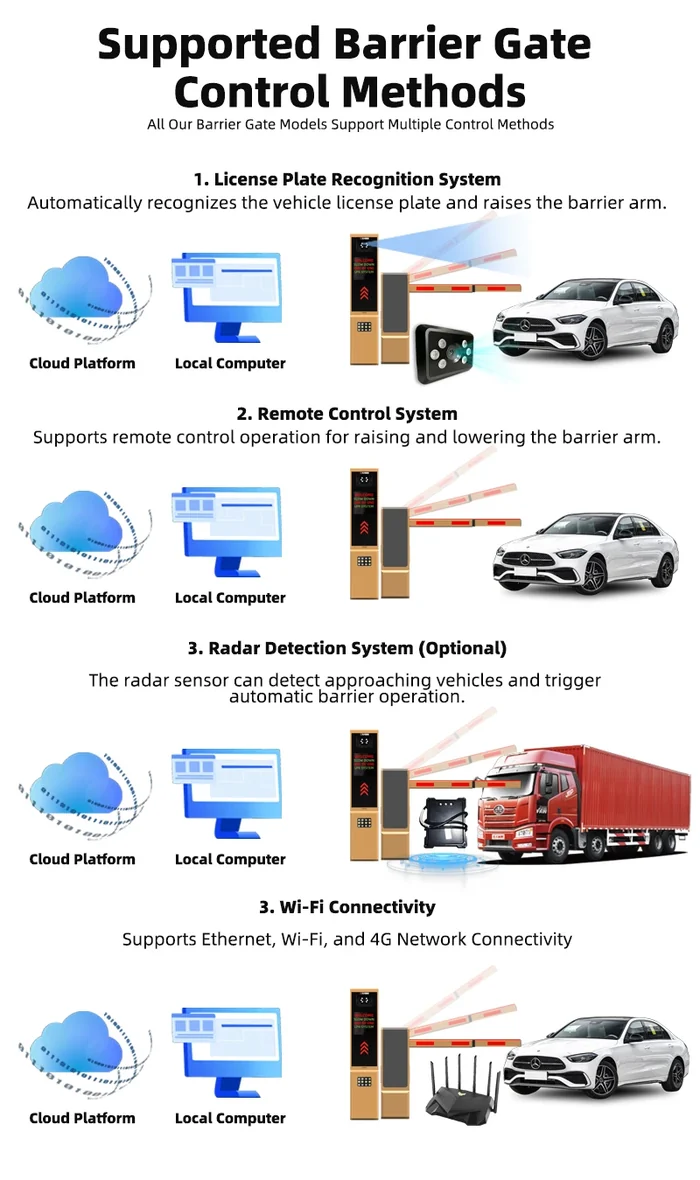
The exact logic varies with the controller, the sensor and the installation, which is why the behaviour has to be written down. A commissioning record should describe what the system does in each of these situations:
A sensor does not make a barrier safe by itself. It has to be compatible with the controller, wired to the correct input and configured according to the approved design. Commissioning should confirm the detection zone, the signal response, the opening and closing behaviour and the response to faults before the lane is handed back to traffic.
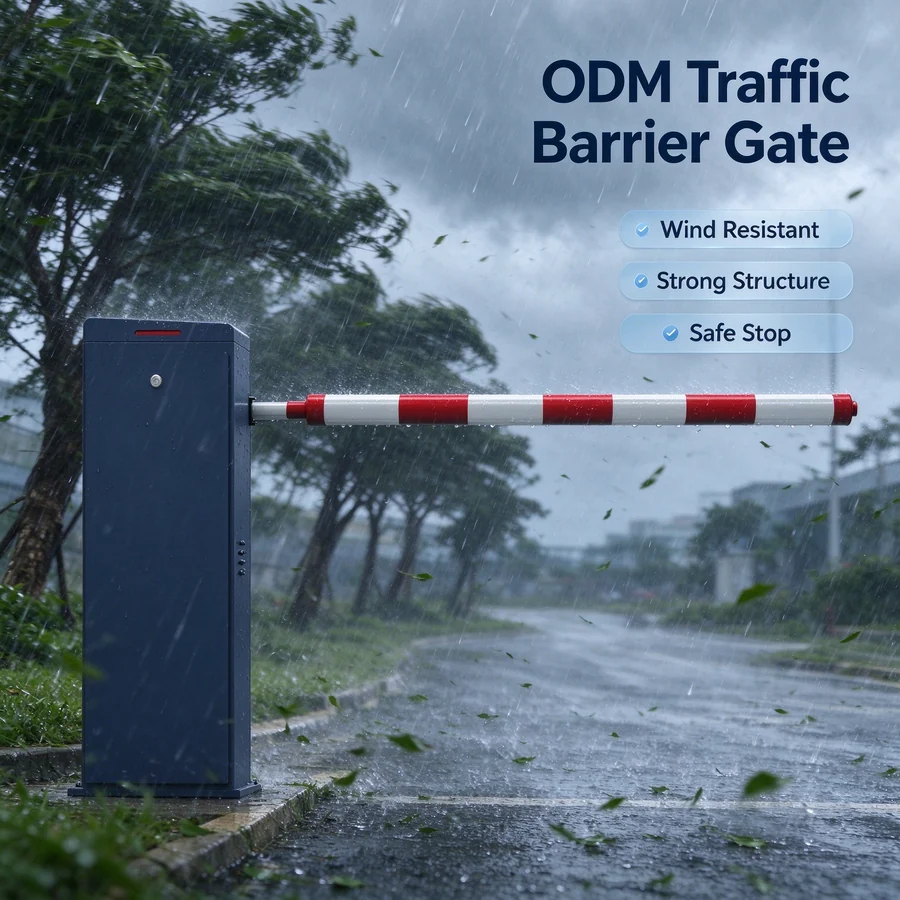
UK sites ask a lot of detection equipment. A barrier may face driving rain, standing water, frost, low winter sun, long dark mornings, road salt, resurfacing and continuous queueing at peak times. The traffic mix is rarely uniform either: a single entrance may serve HGVs, vans, cars, motorcycles, cyclists and pedestrians, with vehicles reversing to let another pass.
That is why detection should be specified from the real movements and hazards at the entrance rather than from a datasheet range. A sensor rated to detect a car at eight metres is not necessarily the right choice for a lane where vehicles stop two metres short of the arm, or where a motorcycle has to be seen beside a metal gatepost.
For exposed positions, confirm the sensor’s stated ingress protection, operating temperature range, mounting requirements and maintenance needs. Do not infer a protection rating from the appearance of the housing. Ask the supplier to confirm the rating for the exact model and to explain any limitation created by the mounting position, nearby structure or site conditions.
Two further UK considerations are worth raising early. First, listed or conservation-area sites may restrict the mounting positions and cable routes available, which can rule out a technology before performance is even discussed. Second, sites with a high proportion of motorcycles, bicycles or delivery mopeds need detection that responds to small metal masses and low approach speeds, not only to a two-tonne test vehicle.
Most detection complaints at a barrier fall into a small number of patterns. The table below is a first-pass guide for a facility manager; diagnosis and repair should be carried out by a competent technician.
| Symptom | Possible checks |
|---|---|
| Barrier closes while a vehicle is still in the lane | Stop use if unsafe. Check sensor coverage, alignment, configuration, controller logic and wiring. |
| Barrier remains open | Check whether the detection field is blocked, the sensor is continuously triggered, or a control input is stuck. |
| False detection or repeated opening | Review mounting angle, sensitivity, nearby moving objects, metal structures and the configured detection zone. |
| Detection works intermittently | Check power supply, connections, moisture ingress, cable damage and fault indicators. |
| Problems begin after road works | Reassess the detection zone and check whether a loop, cable or sensor mounting position was disturbed. |
Never treat a bypassed sensor as a permanent workaround. If the barrier behaves unpredictably, follow the site’s isolation procedure, prevent vehicle use of the affected lane and contact a qualified service provider. Restore operation only after the cause has been identified and the safety functions have been retested.
The protective measures required at a barrier depend on its design, its installation and its intended use. Facility managers should ask the installer to identify the UK requirements and standards applicable to the specific equipment, to document the risk assessment, and to provide commissioning and handover records. A supplier’s general claim that a sensor is “anti-smash” or “safe” is not a substitute for confirming the behaviour of the complete installed system.
Settings should not be changed casually after commissioning. Any adjustment that alters the detection field or the barrier response should be assessed, recorded and retested by competent personnel. Where a site changes — a new traffic route, a relocated pedestrian path, a resurfaced lane, a different vehicle mix — the detection design should be reviewed rather than left as it was.
Facility managers should also keep the paperwork together: the risk assessment, the commissioning record, the as-built wiring diagram, the maintenance log and the incident reports. When an insurer, a client or an enforcing authority asks how the barrier is managed, that file is the answer.
Start with the site hazard and the required detection area, then compare technologies and confirm compatibility with the barrier controller. The Baroxon UK radar sensor range covers barrier-mounted vehicle detection, and the two most common configurations are the anti-collision vehicle detection radar for automatic boom barriers and the wireless Bluetooth vehicle detection radar for straight boom barriers, which avoids a signal cable run back to the cabinet.
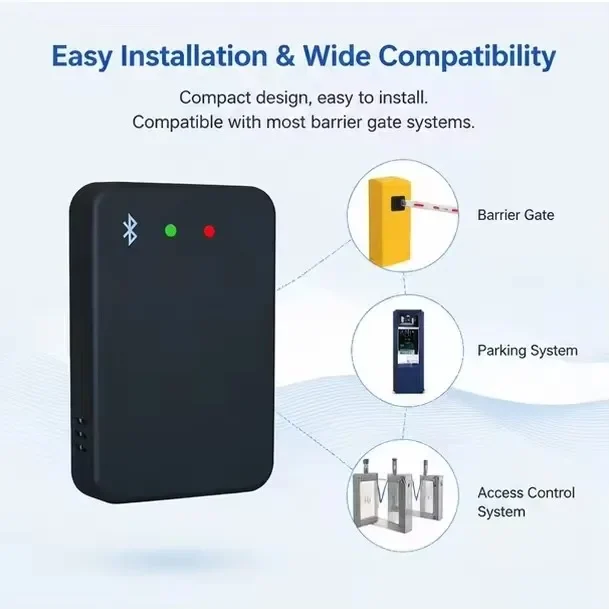
Confirm the exact model, output type, supply voltage, mounting arrangement, environmental rating and controller compatibility in writing before ordering. Do not select on detection range or price alone: two sensors with the same headline range can behave very differently on a lane with a metal gatepost on one side and a pedestrian route on the other.
Ask for the wiring diagram, configuration instructions, commissioning procedure, maintenance guidance and a statement of how the complete system responds to an obstruction. If the entrance has unusual geometry, mixed traffic or frequent reversing, request a site-specific recommendation rather than a catalogue default.
The barrier itself matters too. Detection is fitted to protect a specific arm, at a specific speed, on a specific lane, so the Baroxon UK boom barrier range and the sensor should be specified together. Sites that already run a barrier should also review the parking barrier maintenance checklist so that detection is inspected alongside the mechanical parts.
Neither is best for every site. Radar avoids road cutting and can be configured to cover a defined field, which makes it a strong option for retrofits and for lanes where vehicles stop or reverse unpredictably. An induction loop detects metal vehicles over a coil in the road and is well suited to stable lane geometry and new-build or resurfacing projects. Choose on site geometry, required detection behaviour, civil works, maintenance access and controller compatibility.
Not necessarily. Coverage depends on the technology, model, mounting position, configuration and site layout. A single device may leave blind spots behind the arm, at the edges of the lane or where a pedestrian walks close to the cabinet. The installer should demonstrate the actual detection area and test the vehicle movements that create risk at that entrance.
Yes. Follow the manufacturer’s instructions and the site maintenance plan. Inspect housings, mounts, cables and detection areas, review fault records, and retest the system after any impact, adjustment or repair. Detection faults often appear gradually, so a scheduled check catches drift before it becomes an incident.
Treat it as a safety fault. Prevent use of the affected lane, follow the site isolation procedure and contact a competent technician. Do not bypass the sensor and do not return the barrier to service until the cause has been investigated and safe operation has been verified and recorded.
Usually yes, provided the controller has a compatible input and the sensor can be mounted where it can see the lane. Retrofit is one of the main reasons operators choose radar over a loop, because no road cutting is required. The controller, its firmware and the existing wiring should be checked first, and the new device should be commissioned and documented like a new installation.
Parking barrier safety sensors are a small part of a vehicle access system and the part most directly responsible for whether the arm is allowed to move. Safe operation depends on choosing a technology that suits the lane, mounting and configuring it correctly, integrating it with the controller, commissioning it with representative vehicles, and maintaining it afterwards.
For UK facility managers the practical discipline is the same at every site: document the hazards at each entrance, verify the detection area under real conditions, record what the system does when a signal is lost, and investigate faults instead of bypassing protective inputs. A barrier that is specified and commissioned this way will be quieter, cheaper to run and far easier to defend when something goes wrong.
This article is general guidance. It does not replace the instructions for the equipment installed on a particular site, the site risk assessment, or legal advice on health and safety obligations.
To review detection options, start with the Baroxon UK radar sensor range and the Baroxon UK boom barrier range, or compare the anti-collision radar for automatic boom barriers with the wireless Bluetooth version. For specification support on a live project, discuss your barrier detection requirement with Baroxon UK and our engineers will confirm models, interfaces and lead times in writing.

 WhatsApp: +8613405313100
 Scan to add our export desk