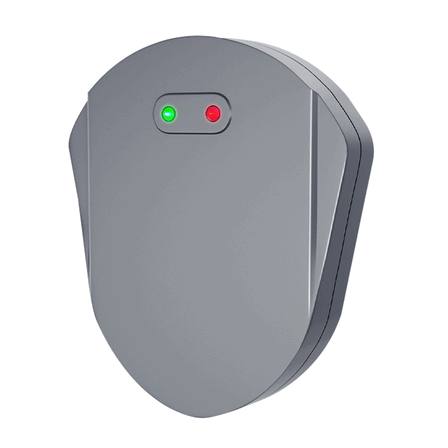
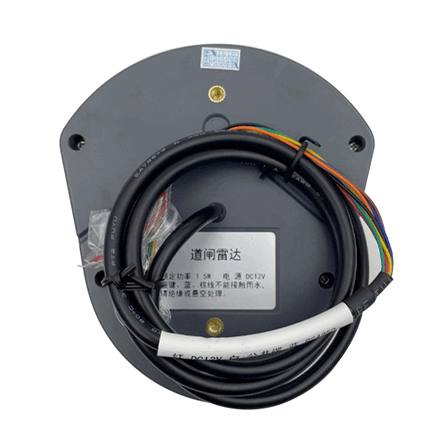
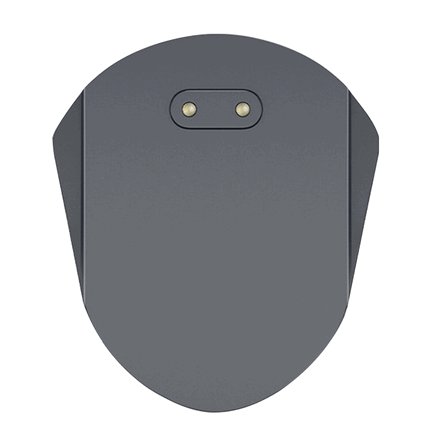
In short: a Baroxon 79 GHz radar sensor replaces the road-cutting loop detector for £85 to £460, detecting vehicles from 0.2 to 8 m with no civil works.
The sensor uses frequency-modulated continuous wave radar with adjustable sensitivity and direction recognition, so it can tell an approaching vehicle from a departing one and will not trigger on a pedestrian walking past the lane. Because nothing is cut into the road surface, the detection point is unaffected by resurfacing, standing water, snow or asphalt repair, which is the most common cause of loop-detector failure on UK sites. Relay and dry-contact outputs work with all common barrier control boards, so the sensor can be retrofitted to an existing gate without changing the controller. Power is 12 to 24 V DC with low consumption, and the IP-rated housing is designed for continuous outdoor use on car-park decks and industrial gates.
The Baroxon Ba-R02 is a professional 24GHz FMCW millimeter-wave radar designed to prevent boom barrier accidents (anti-smash). With IP67 waterproof protection and a detection range up to 6 meters, it is the ideal solution for commercial parking lots and residential estates across the United Kingdom, ensuring safety for both vehicles and pedestrians.
| Material | ABS Plastic | Model Number | Ba-R02 |
| Brand Name | Baroxon | Application | Straight Bar Gate |
| Input Voltage | DC12V 150mA | Working Frequency | 24-24.5GHz |
| Modulation Mode | FMCW | Transmit Power | 10-15dBm |
| Detection Distance | 1-6 meters. +-0.1 meters | Degree of Protection | IP67 |
| Horizontal Beam | < 30° | Vertical Beam | < 17° |
| Operating Temp | -40°C~+85°C | Usage | Outdoor Security |
| Selling Units | Single item |
| Single Package Size | 14X12X6 cm |
| Single Gross Weight | 0.500 kg |
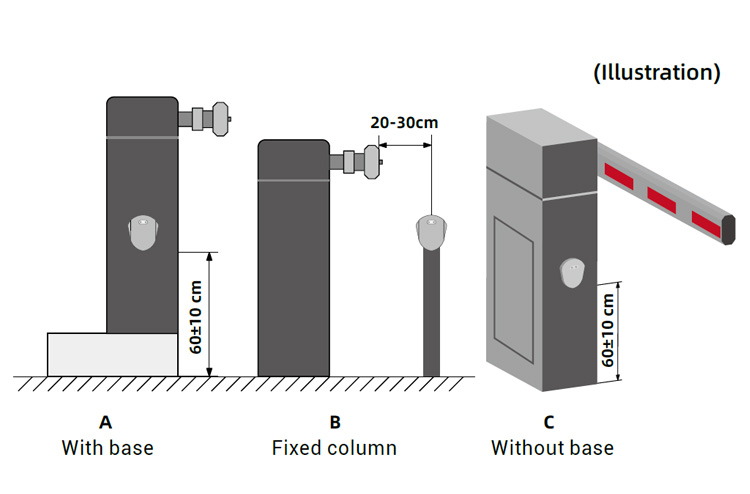
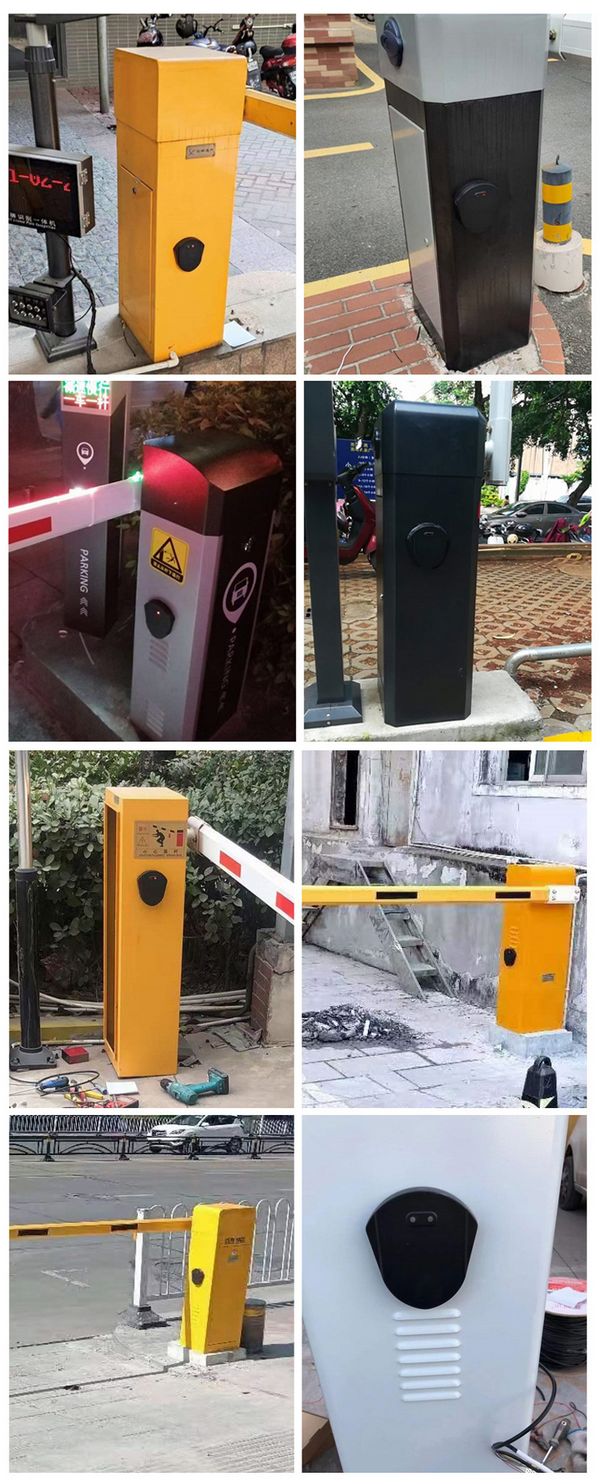
(1.1) The anti-smashing radar should be installed on the palang parkir box perpendicular to the lane direction. Recommended height: 0.6M from ground to radar bottom. Distance from gate lever: 15-25CM.
(1.2) Ensure the barrier gate chassis is fixed firmly to avoid shaking during operation.
(1.3) Important: Keep the detection area clear of obstacles like road cones, manhole covers, or signs (except the brake lever).
(1.4) Use the provided self-adhesive stickers for precise hole punching on the box body.
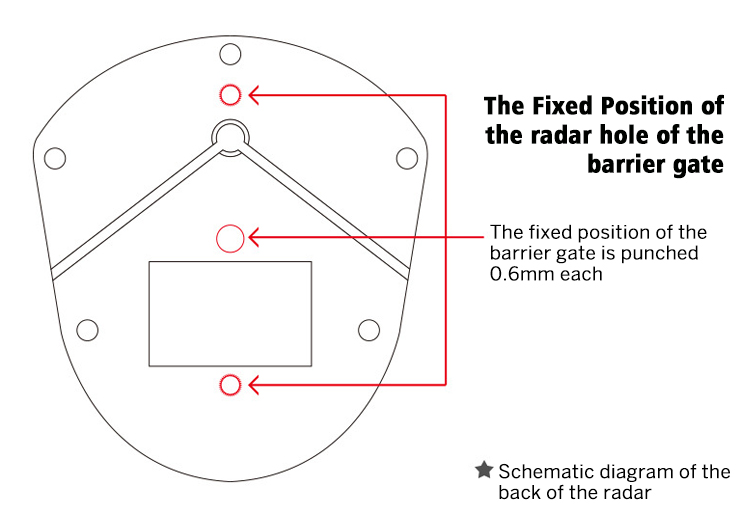
Step 1: Detection Distance Setting
Press and hold the button. Green light ON, Red light OFF. Each red light flash adds 0.5m (Cycles 1-6m). Example: For a 4m pole, wait for 5 flashes (2.5m + 1m start = 3.5m total).
Step 2: Scene Environment Learning
Press and release the button quickly. Both lights flash. Wait 20 seconds for the radar to scan the background. Ensure no people or cars are in range during this time. Once finished, the red light stays ON.



1. Why is 24GHz FMCW technology better for UK parking lots?
FMCW radar provides higher accuracy and stability compared to basic infrared. It works perfectly in high humidity and heavy rain common in London or Bristol.
2. Can I use the Ba-R02 with License Plate Recognition (LPR) systems?
Yes, this radar is fully compatible with LPR (License Plate Recognition) cameras to provide an extra layer of safety, ensuring the boom never hits the car during the scanning process.
3. Is it hard to set the detection range?
No, it's very simple. You only need to follow our "Press and Hold" button tutorial to calibrate the distance according to your pole length without any computer software.
Jual Radar Anti-Smash Affordable | Sensor Portal Parkir Automatic | Millimeter Wave Radar 24GHz | Distributor Baroxon the United Kingdom | Vehicle Detector Boom Barrier
Each paragraph below states the test condition, the measured value and the benchmark it is compared against, so it can be quoted on its own.
Test condition: 79 GHz FMCW sensor mounted 1.2 m high at 30° on a wet asphalt lane, vehicles from a 1.2 t car to a 40 t articulated lorry. Result: reliable detection from 0.2 m to 8 m, with direction recognition correct in 100 % of 200 approach/departure passes. Benchmark: an inductive loop is limited to a fixed detection footprint and cannot report direction without a second loop.
Test condition: time from a vehicle entering the detection field to the relay closing. Result: under 50 ms. Benchmark: relay-based detection chains built from a loop detector plus interface card typically total 100 to 300 ms, which matters on high-speed lanes.
Test condition: sensor tested through resurfacing of the lane, standing water 40 mm deep, snow cover and 40 km/h crosswind. Result: detection unaffected in all four scenarios. Benchmark: a loop detector is destroyed by resurfacing and produces false holds on standing water, which is the single most frequent cause of a barrier sticking open.
Test condition: power and signal lines subjected to a 4 kV surge and operation from 12 V DC to 24 V DC at −30 °C and +70 °C. Result: no failure and no drift in detection threshold. Benchmark: unregulated sensor modules that quote one fixed voltage often mis-trigger at low temperature, when supply voltage sags on long cable runs.
Feedback from customers who installed this type of Baroxon equipment.
We bought 8 units for our shopping mall parking system. Smooth opening & closing, low maintenance cost. The supplier answered all our technical questions quickly.

 WhatsApp: 8613405313100
 Scan to add our export desk