Short answer: a heavy-duty parking barrier should be specified from the site, not from the product label. Before comparing prices, establish the peak vehicle count per hour, the clear lane width, the arm type the geometry allows, the duty cycle the motor is rated for, the detection and safety devices the risk assessment requires, the enclosure rating for the location, the access-control interfaces you need now and later, and the maintenance and warranty terms behind the quotation. A barrier that answers those eight points will usually cost less to own over its service life than a cheaper unit that does not.
A heavy-duty parking barrier is more than a boom arm at the entrance. On a busy UK car park, business park, residential development or industrial site, the right system has to manage repeated vehicle movements, integrate with the chosen access-control method and keep operating safely in changing weather. Buying on purchase price alone is the most common and most expensive mistake in this category.
This guide sets out the decisions that actually determine whether a barrier performs: traffic profile, boom geometry, motor duty, detection, weather protection, integration, installation, lifetime cost, serviceability and application fit. Each section ends with the questions a UK buyer should put to a supplier before signing an order.
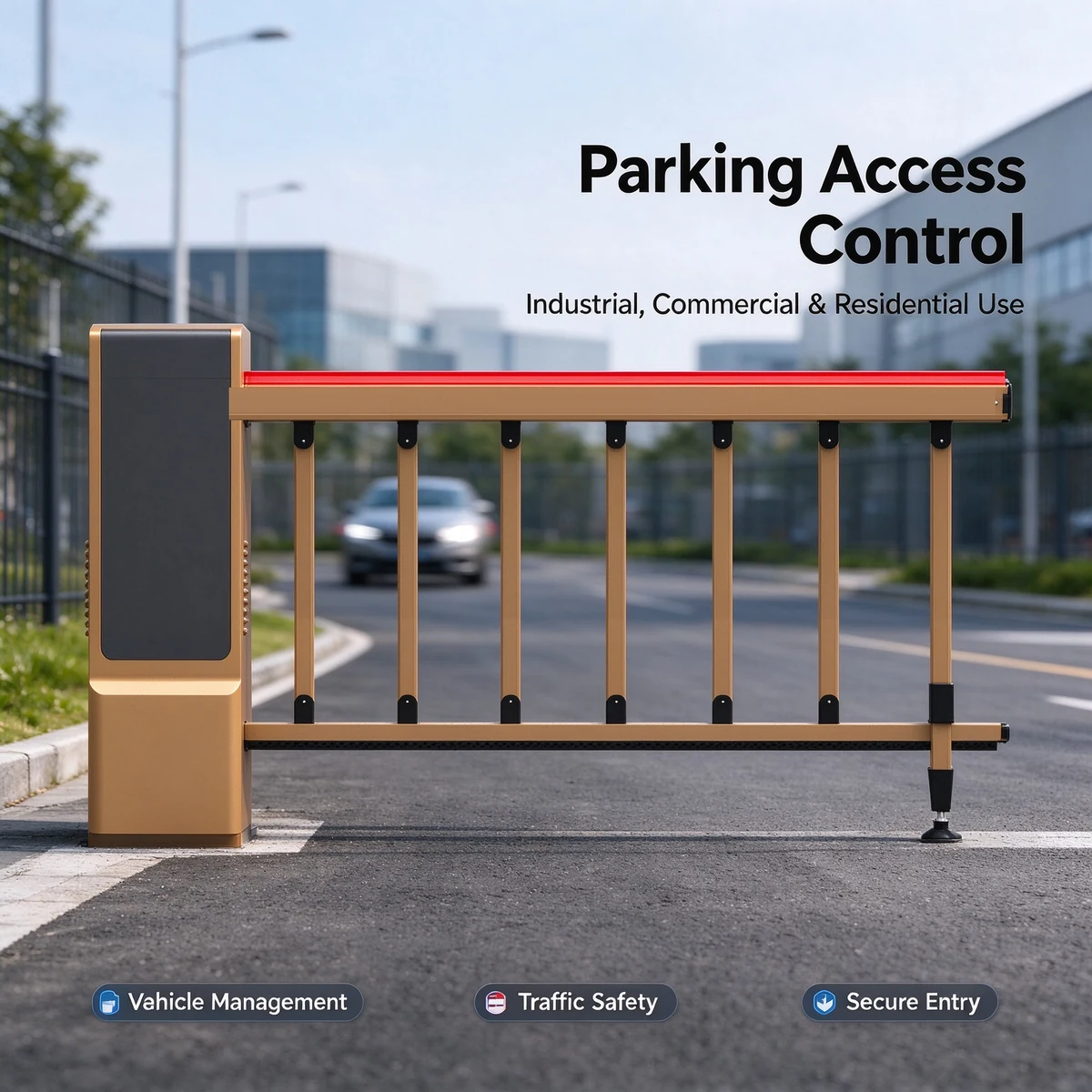
The correct heavy-duty parking barrier depends on where it will be installed and how often it will operate. A staff car park with predictable morning and evening peaks has different demands from a distribution centre, hospital, retail park or multi-storey car park with near-continuous traffic.
Record the following before any specification discussion:
| Site data | Why it changes the specification |
|---|---|
| Average and peak vehicles per hour | Sets the duty cycle, motor type and expected service life; a peak figure matters more than a daily total |
| Opening hours and overnight operation | Determines noise limits, lighting, warning devices and how manual release will be used out of hours |
| Queue length at peak | Drives opening and closing speed, and whether entry and exit need separate lanes |
| Vehicle mix | Cars, vans, LGVs, coaches or HGVs change boom length, height, detection and impact risk |
| Clear lane width | Determines the boom length and the position of the cabinet relative to the kerb |
| Pedestrian routes | Decides whether segregation, separate gates or pedestrian detection is needed |
| Existing equipment | Ticket machines, intercoms, ANPR cameras, loops and controllers constrain interfaces and layout |
A site survey should also check available mounting space, kerbs, drainage, nearby walls, turning circles and the position of any ticket machine, intercom or ANPR camera. These details affect boom length, cabinet position, detector layout and maintenance access — and they are much cheaper to resolve on paper than after the concrete has gone down.
Measure the actual clear width vehicles need to pass, not simply the width shown on a site drawing. The boom has to cover the intended lane without striking kerbs, signs, walls or adjacent equipment. Confirm the manufacturer's compatible arm lengths for the exact model and the arm type before ordering, and check the delivered arm against the opening before the cabinet is finally fixed.
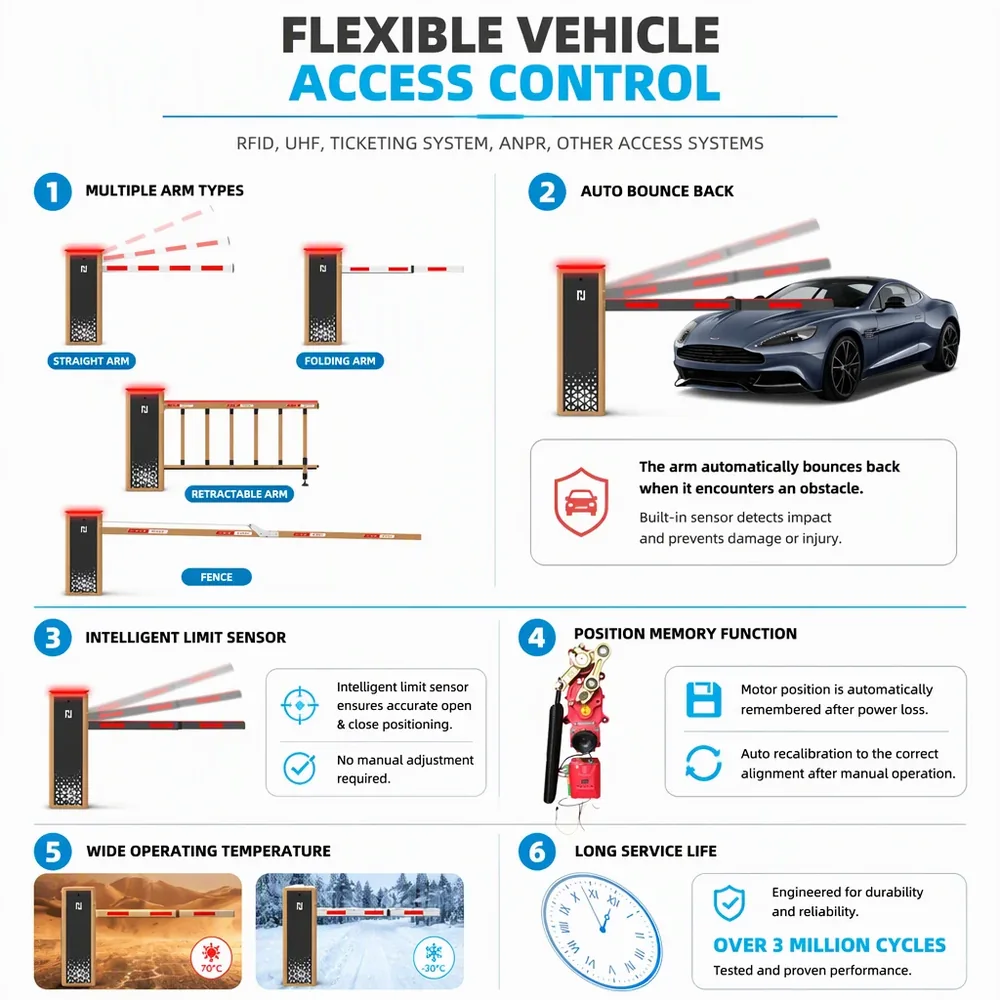
| Arm type | Where it suits | What to check |
|---|---|---|
| Straight arm | Open-air entrances with adequate overhead clearance | Maximum permitted length, wind rating, and that the arm does not overhang a public footway |
| Folding arm | Sites with a low ceiling, canopy or building overhang | Folded height, hinge condition, and that the folded arm clears vehicles below |
| Fence-style or multi-rail arm | Lanes where a visibly closed barrier is wanted, or where climbing over must be discouraged | Added wind loading, drive sizing, foundation strength and reduced opening speed |
A straight arm is often suitable where overhead clearance is available. A folding arm may be worth considering where a low ceiling or building overhang limits vertical clearance. A fence-style arm can provide a more visually closed lane, but it adds wind loading and mechanical demand, so the drive and foundation have to be specified for it rather than assumed from a straight-arm datasheet.
For frequent use, ask about the motor and drive mechanism, the rated duty cycle, the expected daily operations, the opening and closing time, soft-start and soft-stop behaviour, and the service-life testing behind the design.
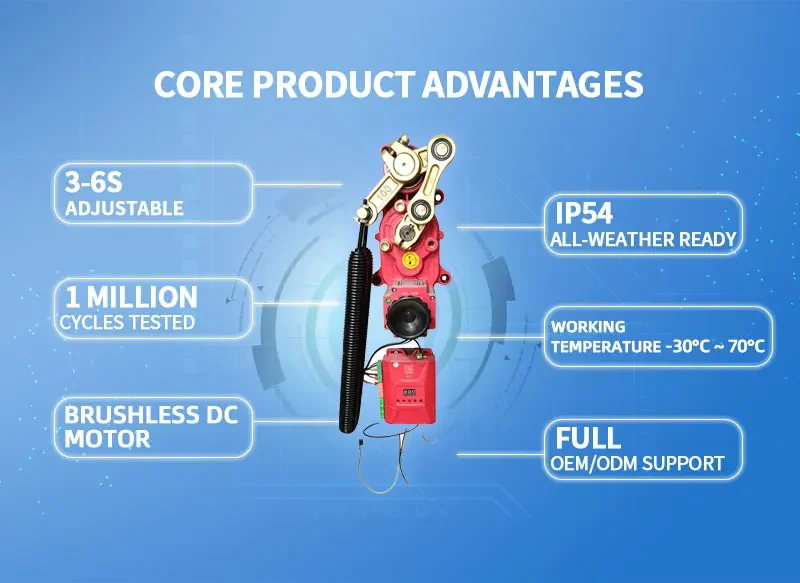
Brushless DC drives are common on modern barrier ranges because they offer controlled acceleration, low noise and fewer wearing parts than a traditional geared AC motor. Heavy-duty AC drives are still used where very high volumes or long arms demand them. Either can be right: the point is to match the drive to the real traffic pattern and to ask for the rated duty cycle in writing.
Do not select the fastest barrier automatically. Operating speed must match traffic flow, vehicle detection, pedestrian separation and the site's safety strategy. At a busy entrance, a system designed to balance throughput with safe movement is more useful than a headline opening time that does not suit the lane, and very fast arms increase both impact risk and maintenance demand.
A barrier arm can injure a person or damage a vehicle if it closes onto something. Ask how the proposed system detects vehicles and obstacles, how it responds when an obstruction is detected, and which safety devices are included as standard rather than optional.
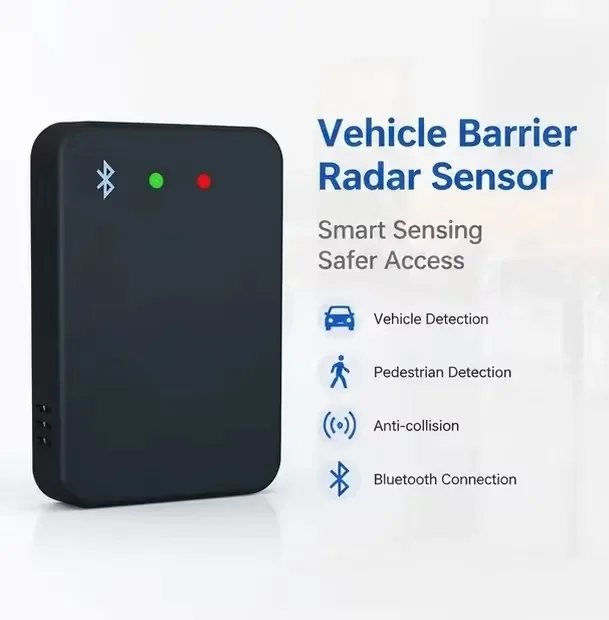
| Device | What it detects | Typical use | Main limitation |
|---|---|---|---|
| Radar detector | Movement and presence inside a configurable field, including people | Retrofit lanes, mixed traffic, pedestrian detection, no road cutting | Field must be tuned on site and can be affected by adjacent traffic or metal structures |
| Inductive loop | Metal vehicle mass over a buried coil | Stable lane geometry, new build or resurfacing projects, presence under the arm | Requires road cutting and is vulnerable to water ingress and cable damage |
| Photocell or infrared beam | An object breaking one defined line | Point protection at the closing line or a pedestrian route | Single line only; blind to anything outside the beam |
| Warning light and sounder | Nothing — it warns people | Every automatic lane, especially in low light or noisy sites | A warning is not a protective device |
Confirm the detection zones and what the arm does during entry, exit, tailgating and power interruption. Ask specifically what happens when the supply fails: does the arm stay where it is, rise, or become free to move by hand? The answer determines the manual release procedure and the training your staff need.
For UK projects, ask the installer or supplier to identify the legislation, standards and conformity documentation that apply to the complete installed system. Do not rely on a generic “compliant” claim: the required evidence depends on the product, the intended use, the installation and the project specification, and the barrier is only one part of a vehicle access installation that includes detection, signage and safe lane design.
Outdoor equipment is exposed to driving rain, dust, temperature swings, wind and accidental impact. Check the enclosure's stated IP rating, operating temperature range, corrosion protection, drainage and the environmental conditions used for testing — and make sure the rating applies to the exact model being quoted.
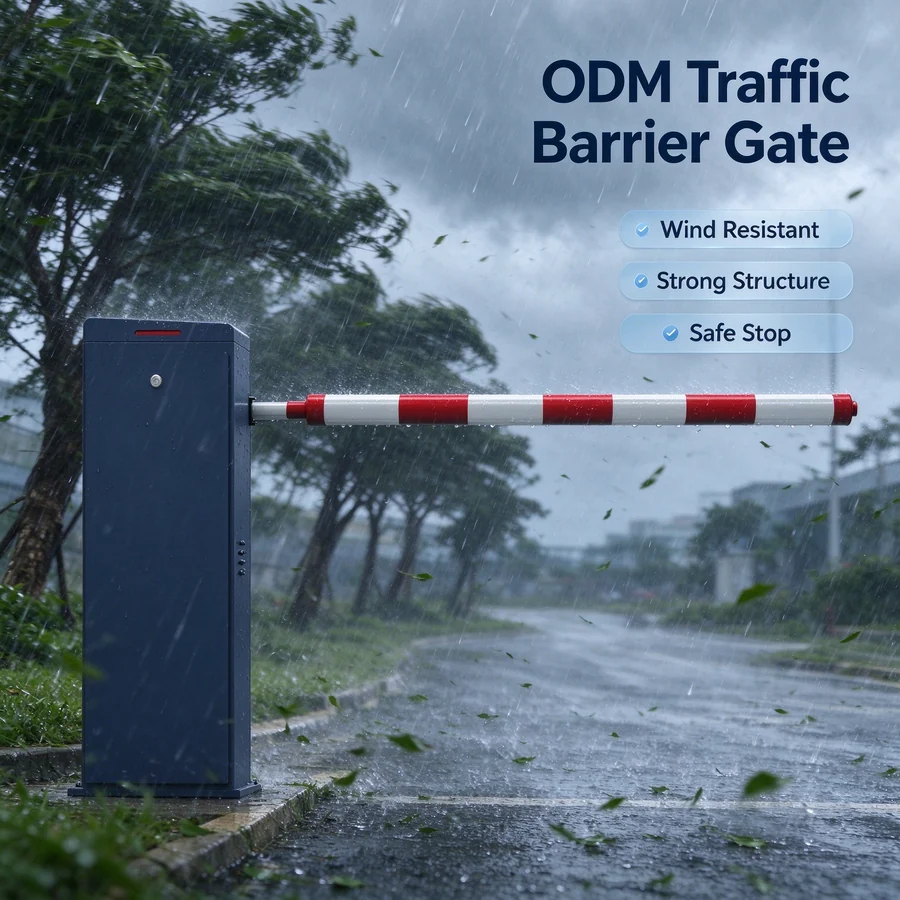
For exposed coastal, roadside or industrial locations, confirm that the finish and cabinet materials suit the local environment. Salt-laden air, standing water and grit all shorten the life of fixings and seals. If the site is particularly windy, ask the manufacturer to confirm the permitted boom configuration and wind limitations: a longer or fence-style arm creates a different load from a short straight arm, and the foundation has to be designed for the arm actually fitted.
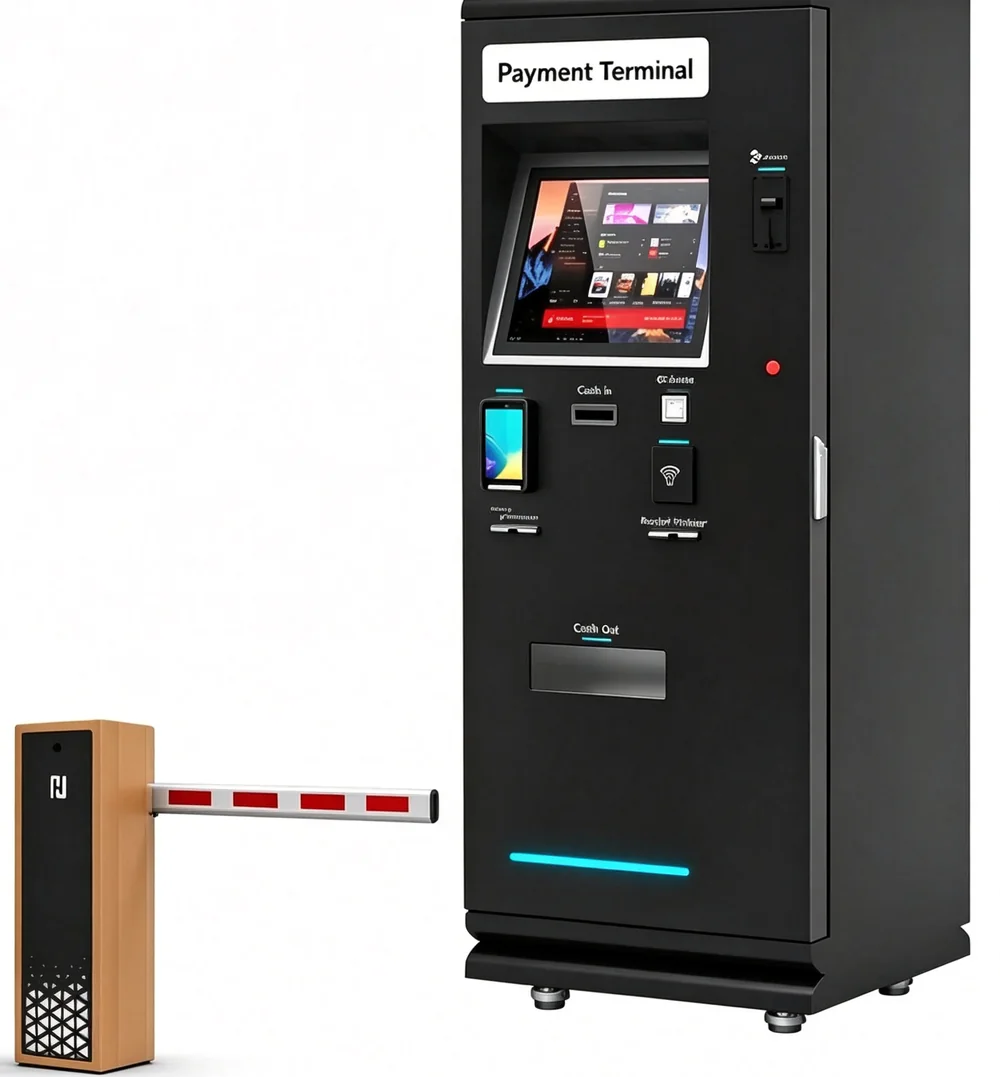
A heavy-duty parking barrier is usually one component in a wider vehicle access-control system. Depending on the site it may need to work with remote controls, RFID cards or tags, a keypad, an intercom, ticketing equipment, ANPR or LPR number-plate recognition, a payment terminal or a building management platform.
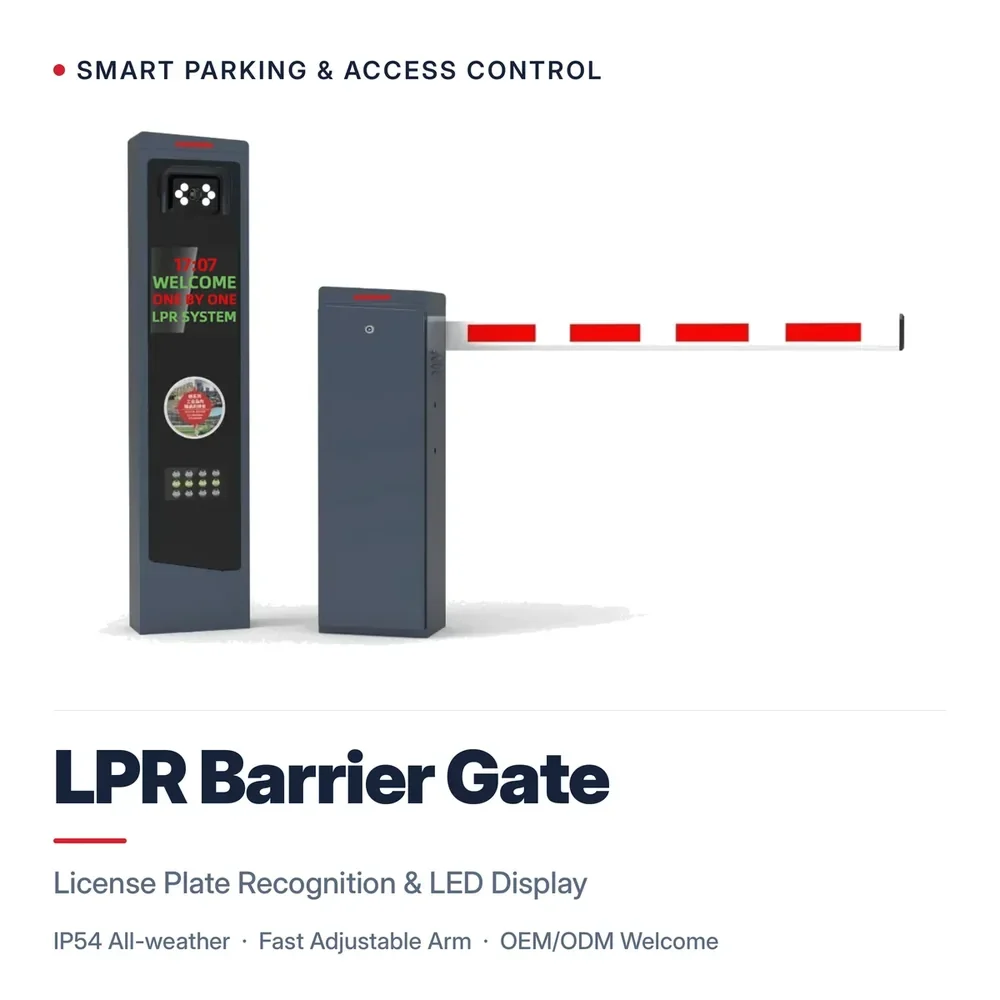
Confirm the available interfaces — typically dry-contact relay, Wiegand, RS485 or TCP/IP on specified configurations — and the logic for authorised entry, visitor access, emergency release and manual operation. These interfaces are not interchangeable in every installation, so ask for a wiring diagram, an interface specification and written confirmation of compatibility with your existing controller, software and credentials before purchase.
If number-plate recognition is required, establish how the camera, the whitelist and blacklist, the visitor workflow and the barrier controller communicate. Include a plan for unreadable plates, delivery vehicles, temporary visitors and network outages, so the site stays manageable when the automation is unavailable. A barrier that cannot be operated when the network is down is a business risk, not a security feature.
Before ordering, confirm the cabinet footprint, fixing method, foundation requirements, cable routes, supply voltage, earthing, drainage and any protection needed for exposed cables. The site may also require traffic management during installation and a plan for keeping the entrance operational while the barrier is out of service.
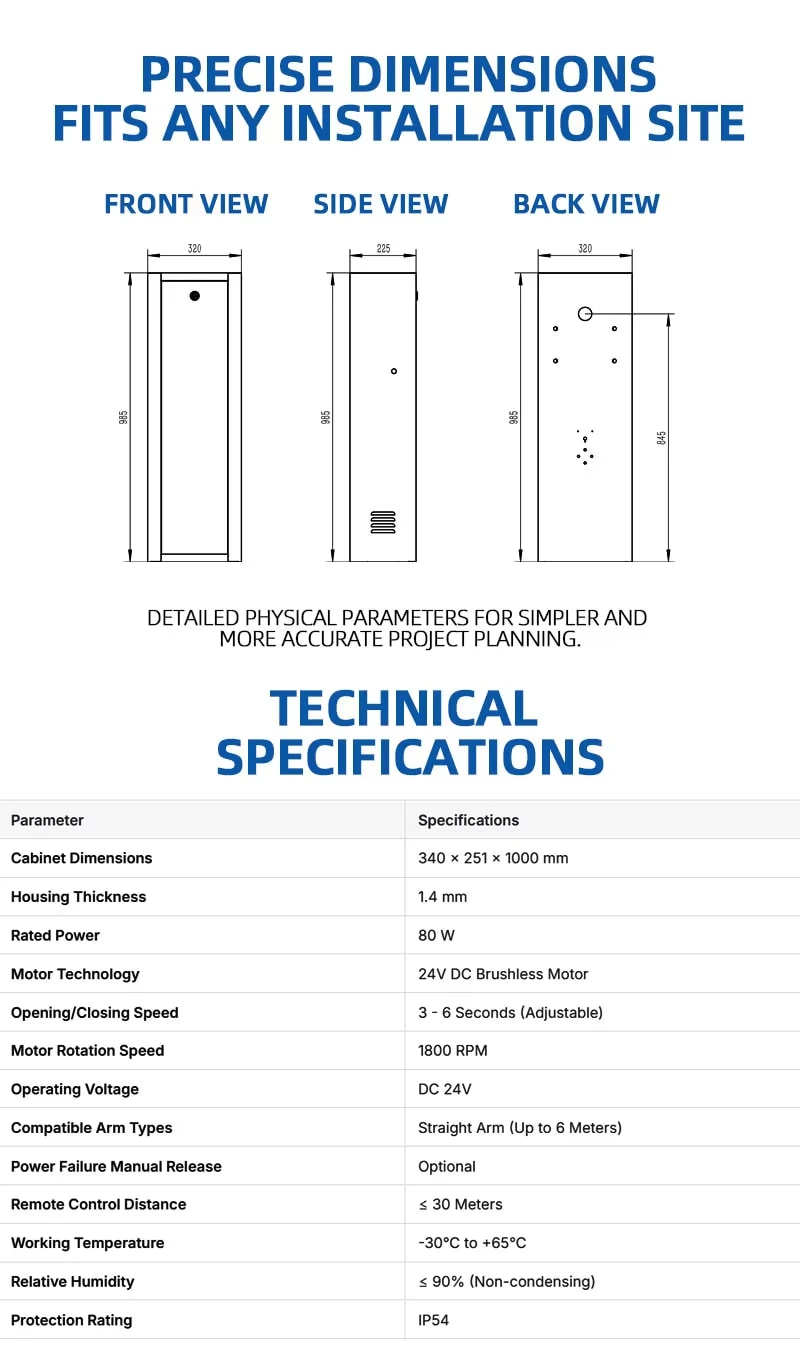
The quotation should state exactly what is included: barrier cabinet, boom arm, controller, remotes, safety detectors, mounting hardware, commissioning, training and any integration work. Clarify which tasks belong to the supplier, the installer, the electrician and the site operator. Ambiguity here is the usual reason a project overruns, because civil, electrical and access-control trades each assume the other is providing the missing item.
A low initial price is not the best long-term value if the system is poorly matched to traffic volume, difficult to maintain or expensive to integrate. Compare the complete installed cost and the expected operating costs, and ask for a written warranty that states the covered components, exclusions, duration and claim process.
| Cost line | What to ask for |
|---|---|
| Equipment and delivery | Model-specific quotation, lead time, and what is excluded from the price |
| Groundworks and electrical | Foundation, ducting, supply and earthing quoted separately but designed together |
| Detection and safety devices | Itemised as standard or optional, with models named |
| Integration and commissioning | Who configures the controller, tests the interfaces and signs off the system |
| Planned maintenance | Visit frequency, scope, consumables and response times |
| Downtime and parts | Spare-part availability, local stock, call-out charges and typical repair time |
Check spare-part availability, remote fault diagnosis, commissioning assistance and the expected response process if the barrier fails during business hours or overnight. On a revenue-generating car park, an arm that stays down for a day can cost more than the price difference between two competing models.
A heavy-duty barrier needs routine inspection and maintenance. Ask how the drive mechanism and control board are accessed safely, which components are consumables, what checks are recommended, and whether maintenance documentation is provided. Ensure the installed system can be isolated safely before servicing, and that operators know how to use the manual release.
A practical maintenance plan covers visual checks, arm alignment and fixings, detector function, warning lights, controller settings and signs of water ingress or corrosion. Intervals should follow the manufacturer's instructions, the usage intensity and the findings of the site risk assessment. It is worth confirming before purchase that the cabinet can be opened and serviced without closing the lane for a full day, because that constraint often decides which model is practical on a busy site.
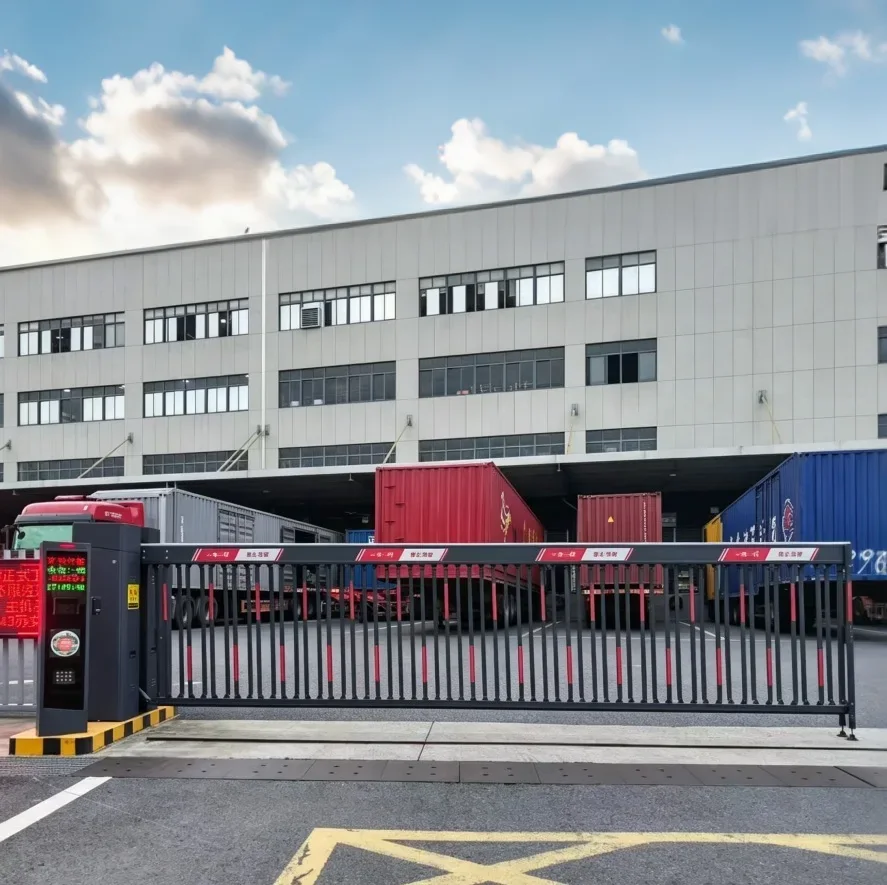
The site context should drive the specification. A configuration that works well for a small private entrance may not suit a multi-lane commercial facility with frequent heavy vehicles. Ask the supplier to recommend a model from documented site requirements, not from a generic “heavy-duty” label.
Use this checklist when contacting a supplier, and expect written answers rather than a brochure:
Send the supplier the site location, clear lane width, estimated peak traffic, required arm type, preferred access method, existing controller details, power availability and any site-specific safety or compliance requirement. A photograph of the entrance and a simple plan are usually enough to turn a generic quotation into a specification that can be checked.
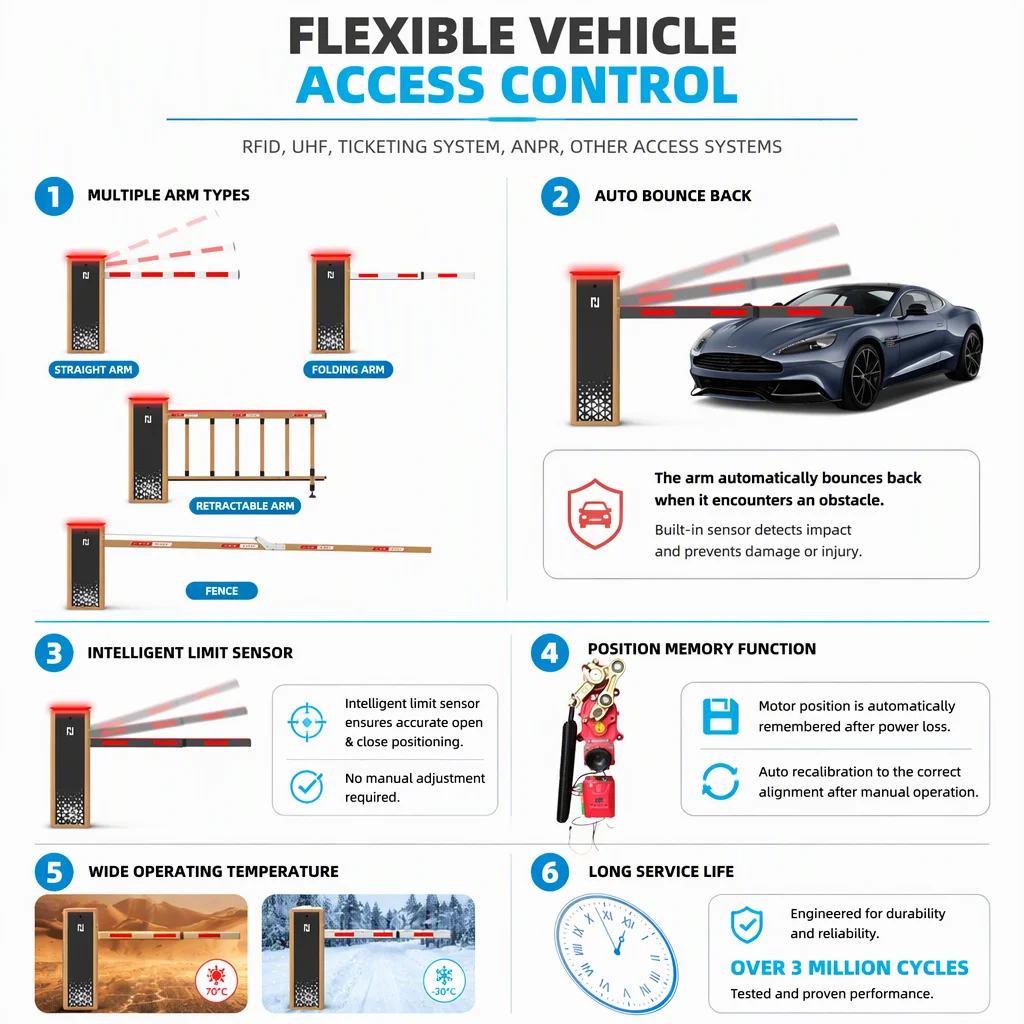
The BAROXON UK heavy-duty boom barrier range covers automatic boom barriers, high-speed barrier gates, ANPR and LPR barrier configurations, RFID options, radar sensors, parking locks and related access-control products. That breadth lets a project team assess the barrier together with the detection and access-control equipment it will work with, instead of buying the arm and the sensors from separate suppliers who never speak to each other.
Features, interfaces, ratings, warranty terms and delivery details vary by model, so ask for a written, model-specific proposal. Include the lane dimensions, peak traffic estimate, required arm type and access-control requirements so the proposed configuration can be checked against the site before an order is placed.
“Heavy-duty” should be supported by the model's motor and drive design, duty-cycle rating, permitted boom length, operating frequency, construction, environmental rating and maintenance requirements. Ask for the datasheet for the exact model rather than relying on the label alone, and compare the cycle rating with the traffic you actually expect.
Measure the clear lane width and check the position of kerbs, walls, signs and nearby equipment. Then confirm the manufacturer's compatible arm lengths and any limits for the selected model and arm type. Allow for wind loading if the arm is long or fence-style, and check that the arm does not obstruct a footway or sight line when it is raised.
It can where the barrier controller, the ANPR camera and the access-management software have compatible interfaces and the entry logic is configured correctly. Confirm the interface specification and plan for unreadable plates, visitors and network failure before relying on it.
Depending on the site design, options include inductive loop detectors, radar sensors, photocells, warning lights and a suitable manual release arrangement. A competent installer should assess the complete system and confirm both the devices and the behaviour of the arm when a signal is lost.
Get the warranty in writing, including covered components, exclusions and the claim process. Also confirm spare-part availability, technical support, commissioning assistance and the expected response procedure if the barrier stops working. On a busy site, response time matters more than warranty length.
Service life depends on cycle count, load, environment and maintenance. Manufacturers publish cycle-tested figures for their drives, but the realistic life on your site depends on how many movements per day the barrier actually makes and whether the maintenance plan is followed. Ask for a maintenance schedule with the quotation so the cost of ownership is visible before purchase.
Choosing a heavy-duty parking barrier is a site-engineering decision as much as a purchasing decision. Confirm traffic demand, boom geometry, motor duty, safety detection, weather protection, integration, installation requirements and lifetime support before comparing quotations. A properly specified system is more likely to deliver dependable vehicle access and manageable maintenance over its service life, and it is far easier to defend when something goes wrong.
This article is general guidance. It does not replace a site survey, a risk assessment, the manufacturer's instructions for the equipment installed, or legal advice on health and safety obligations.
For model-specific advice, request a quotation and a written specification from the BAROXON UK team, or review the vehicle detection radar range and the anti-collision radar for automatic boom barriers that are commonly specified with these lanes. For wider planning, compare this guide with our smart parking access control overview, the parking barrier safety sensor guide and the parking barrier maintenance checklist, or start from the parking barrier and access-control product range. Include the lane dimensions and access-control requirements with your enquiry so the proposed configuration can be checked against the site.
Once the lane geometry and duty are fixed, the next decision is which configuration suits the entrance. Our guide to the main types of automatic parking barriers compares straight-arm, folding-arm, high-speed, long-arm and access-integrated options side by side.

 WhatsApp: +8613405313100
 Scan to add our export desk